Introduction to Guide to Using City Buses in Korea for Foreigners
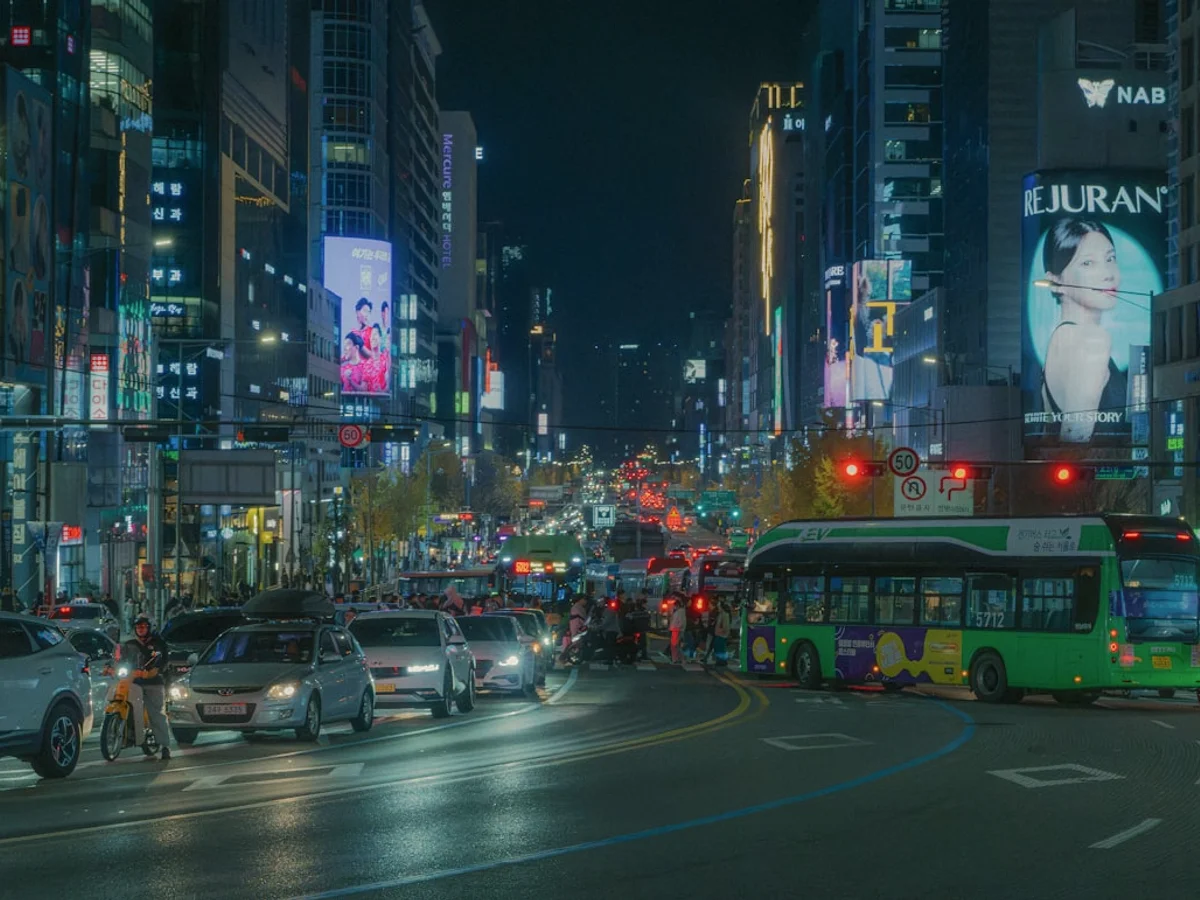
Getting around by bus in Korea is surprisingly simple once you crack the color code that dictates whether a bus stays local or hits the highway. All you really need is a T-money card, a bit of patience for the GPS-synced arrival screens, and a quick glance at the Blue, Green, or Red exteriors to know if you’re headed across town or just down the street. I still remember standing near Seoul Station around 5:30 PM, watching this sea of vibrant vehicles rush past while the aroma of spicy tteokbokki wafted from a nearby stall. When I first landed in Seoul, the sheer number of buses - oh man - it was overwhelming. Thing is, the colors actually make sense once someone explains them. The Blue buses are like the city’s veins, connecting far-flung districts across long distances, while the Green buses are the capillaries, weaving through neighborhoods to drop you right at your doorstep. Not gonna lie, you know what surprised me the most? How those huge vehicles somehow squeeze into the tiniest alleys without clipping a single mirror. The sound of traditional music drifted through the air.
Decoding the Rainbow
Honestly, I think the system is way more efficient than what I’ve seen back home, even if the driving can feel a bit… spirited sometimes. The colors categorize the service type so you don’t accidentally end up on a highway to Gyeonggi-do when you just wanted to go two stops over for coffee.
- Blue buses (Trunk): These cover the main roads and connect different districts; expect to pay about 1,500 won with a card.
- Green buses (Feeder): Smaller and perfect for short hops or getting from a subway station to a specific neighborhood.
- Red buses (Express): These are the heavy hitters for commuters living outside the city—they’re faster but pricier, usually around 2,800 won.
- Yellow buses (Circulation): You’ll see these mostly in tourist areas or around major hubs like Namsan.
Coverage and the “Stop” Button
I once took a bus out to a random corner of Mapo-gu just because I liked the view of the Han River from the window. The coverage is honestly ridiculous. Well, in a good way. You can get almost anywhere, even places the subway wouldn’t dream of going. One thing that always gets me is the vibe inside - the mechanical “ding” when someone hits the stop button, the way the driver expertly navigates a turn that looks way too narrow. The seats can be a bit hard, though, and if you’re standing during rush hour, you better hold onto those handles for dear life! Why do people prefer the bus? It’s the convenience. You don’t have to hike up and down five flights of stairs like you do in the subway. I personally find it much more relaxing to watch the city lights blur past at 10 PM than to stare at a dark tunnel wall. Just remember to tap your card on the reader when you get off. If you don’t, well, you’ll miss out on that glorious free transfer and get charged a penalty on your next ride. It’s those little quirks that make the experience feel real, you know? It was surprisingly quiet despite the crowds.
How to experience Guide to Using City Buses in Korea for Foreigners like a local
Koreans rely on the bus system because it’s the only way to reach those tucked-away neighborhoods and steep hillsides that the subway simply ignores. Not gonna lie, it’s remarkably efficient, with a 30-minute free transfer window that turns your commute into a bargain, and honestly, the sheer frequency of arrivals is a level of reliability you just don’t find in many other global cities.
Why It Beats the Subway (Sometimes)
When I first moved to Seoul, I was a subway purist. I thought, why bother with traffic when you have a train? Well, I quickly learned that the subway stations can be a nightmare of stairs and endless tunnels—I still remember dragging a suitcase through Seoul Station at 3 PM and feeling like I’d run a marathon. The bus, though? It’s right there on the street level. You hop on, the cold air from the AC hits you instantly—which is a godsend in August—and you’re off.
- Color Coding: Blue buses for main roads, green for neighborhood hops, and yellow for circular routes.
- Frequency: Most city buses arrive every 5 to 10 minutes during peak hours.
- Accessibility: They stop in places where the nearest subway exit is a 15-minute hike away.
The Magic of the Transfer
Thing is, the real reason everyone loves this system is the cost. I was surprised to find that a ride costs only about 1,500 won (roughly $1.10). The transfer system is where it gets crazy—if you tap your T-money card when you get off, you get a free transfer to another bus or the subway within 30 minutes. I remember one time in Busan, I took a bus to a seaside cafe, stayed for a quick coffee, and made it back to the stop just in time to get my return trip for free. It felt like I was cheating the system, but that’s just how it works here!
Reliability You Can Hear
You know what’s really cool? The sound of the new electric buses. They have this futuristic, quiet hum that has totally replaced the old, rattling diesel engines I used to smell years ago. At the bus stops, everyone is glued to the BIT (Bus Information Terminal) screens. If it says the bus is coming in 2 minutes, it’s coming in 2 minutes. I’ve seen people literally sprint for a bus because they trust that timer more than their own watches. It’s that reliability that makes people choose it over driving their own cars—well, that and not having to find parking in Gangnam, which is basically impossible.
Seasonal considerations for Guide to Using City Buses in Korea for Foreigners
I still remember my first week in Seoul when I thought taking a bus at 8:30 AM was a brilliant idea. Big mistake. The city basically turns into a sardine can during those hours. I’d definitely recommend checking this out. Well, if you want to avoid the worst of it, you really have to time your trips. Most city buses start rolling around 4:30 AM and keep going until about 11:00 PM or midnight. But the thing is, if you’re out late in areas like Hongdae or Gangnam, you’ll want to look for the “N” buses—the Owl Buses. I once waited for an N61 at 2 AM in the freezing cold, and let me tell you, that heated seat felt like a miracle.
- Avoid the morning rush from 7:00 AM to 9:00 AM at all costs.
- Evening peak hits hard between 6:00 PM and 8:00 PM when everyone is heading for dinner.
- Check the KakaoBus app for real-time “crowdedness” levels—it actually shows you if the bus is full.
- Late-night Owl Buses usually run from midnight until 3:30 AM, but they come less often.
The Holiday Shuffle: Seollal and Chuseok
Holiday schedules are another beast entirely. You ever wonder why the streets feel ghost-town quiet during Seollal (Lunar New Year) or Chuseok (Harvest Festival)? While the subway often keeps a steady pace, buses can be a bit more unpredictable because of the massive traffic jams exiting the city. I once spent three hours on a bus that often takes 40 minutes because of the holiday exodus. Honestly, it was pretty frustrating. Most city buses run on a weekend/holiday schedule, meaning they come less frequently. If you’re planning to travel during these times, you absolutely need to buffer in an extra hour. Maybe even two.
Seasons and the Senses
The vibe on the bus changes so much with the seasons, you know? In the winter, the smell of damp wool and roasted chestnuts from street vendors outside drifts in every time the doors open. The best part? Those heated seats. I was so surprised the first time my butt felt warm on a plastic chair—I thought I was imagining things! But then summer hits, and the AC is blasted so high you might actually catch a cold. I often carry a light hoodie even when it’s 35°C outside just for the bus ride. It’s those little sensory quirks that make the Korean bus system feel so… alive. Honestly, I’d pick a bus over the subway any day just for the view of the Han River, especially around 5:30 PM when the sun starts to dip.
Why is Guide to Using City Buses in Korea for Foreigners significant?
Getting around Korea on the bus is basically a masterclass in efficiency, once you stop worrying about ending up in a random suburb. Not gonna lie, you just need a transportation card and a bit of courage to face the city’s brisk driving style. This was actually better than I expected. Honestly, I was surprised by how much cheaper it is compared to taxis, with a base fare of around 1,200 to 1,500 won depending on the city. Not gonna lie, is it worth the stress? Absolutely. This was actually better than I expected.
Paying Your Way
I still remember my first time standing at the front of a crowded bus near Seoul Station, desperately fumbling for my wallet while the driver waited with that “come on, kid” look. You don’t buy paper tickets here; instead, you tap your card on the plastic reader when you board. The device gives a satisfying “beep” and shows your remaining balance. Well, thing is, you HAVE to tap again when you get off. If you don’t, you lose the free transfer benefit, which lets you switch between buses or subways for free within 30 minutes. It’s a game-changer for your budget.
- Buy a T-money card at any convenience store like GS25 or CU for about 3,000 to 5,000 won.
- Top it up with cash - often 10,000 won is a good starting point for a few days.
- If you’re traveling with a friend, you can tell the driver “two people” (du-myeong-iyo) and tap once, but it makes transferring a headache.
Decoding the Rainbow
You ever wonder why some buses are bright blue and others are lime green? I used to think it was just for aesthetic, but it’s actually a clever system. Blue buses are the long-distance runners that connect different districts, while Green buses (Maeul-bus) are the local “village” ones that weave through the narrow alleys. I personally prefer the tiny green ones; the way those drivers navigate steep hills in HBC or Bukchon is nothing short of a miracle. Then you have the Red buses, which are the express ones heading to the outskirts - they’re more expensive, often around 2,800 won, but they have comfy seats and fewer stops.
The Art of Getting Off
The vibe on a Korean bus is here quiet, except for the automated voice announcing the stops. I remember the cold air hitting my face as the doors swung open at Gangnam Station around 3 PM. You’ll see a screen at the front showing the next stop in Korean and English. Ever notice how everyone starts standing up two minutes before the bus actually stops? It’s the “pali-pali” (hurry-hurry) culture in action. The engine’s low rumble under your feet - it’s oddly comforting - until the driver slams the brakes. If you don’t hit that red stop button on the wall or ceiling, the driver might just breeze past your stop.
- Watch the digital screen for your stop name.
- Press the stop button early - don’t be shy!
- Stand near the back door and tap your card one last time before you step out to save those precious won on your next ride.
Where can you find Guide to Using City Buses in Korea for Foreigners?
You’ll get the hang of it fastest by starting at massive transit hubs like Seoul Station or Gangnam, where the sheer variety of buses shows you exactly how the color-coding works. It’s all about spotting the Blue buses for long distances and the Green ones for those shorter, “last mile” hops into local neighborhoods. If you ask me,
Navigating the Giant Transit Hubs
Walking into a major hub like Express Bus Terminal (Honam/Gyeongbu) for the first time is, well, it’s a lot. You’ve got these massive islands of bus stops, and honestly, I was completely overwhelmed when I first landed there around 6 PM on a Friday. The smell of diesel mixed with the sweet scent of delimanju—those little custard cakes—from the station entrance still brings back memories of trying to figure out which “Island 3” I was supposed to be on. I remember thinking, why are there five different buses with the number 143? But then I realized they just arrive so frequently that they queue up. You can hear the constant hissing of air brakes as they pull in, which is weirdly rhythmic once you get used to it.
- Seoul Station: The ultimate convergence point for Blue trunk buses and Red express buses coming from the suburbs.
- Gangnam Station: Perfect for catching the 9000-series Red buses; just look for the insanely long, orderly lines on the sidewalk.
- Hongdae (Hongik Univ. Station): Where you’ll find plenty of Green feeder buses (like the Mapo 09) that save your legs from those brutal uphill climbs.
The Tourist-Friendly Routes and Airport Links
If you’re looking for the “scenic” way to see the city, some buses are practically unofficial tour guides. Take the 143 bus—it cuts through the heart of Myeongdong, crosses the river to Sinsa, and ends up in Gangnam. I still remember sitting by the window around 3 PM on a Tuesday, watching the N Seoul Tower peek out between the skyscrapers. Is there anything better than a city tour for just 1,500 won? Well, maybe, but it’s hard to beat. The only downside is that during rush hour, you might feel like a canned sardine. Just remember to hit that red “Stop” button on the wall before your station, or the driver might just breeze right past it—I learned that the hard way near Itaewon.
- Airport Limousine Buses: These are the gold standard for arrivals. Look for the 6001 or 6015 for Myeongdong; they cost around 17,000 won.
- Night Buses (Owl Buses): Look for the ‘N’ prefix, like the N13. They run from midnight to 4 AM and are absolute lifesavers when taxis are impossible to find.
- Village Buses (Maeul-beoseu): These tiny green buses cost only about 1,000 to 1,200 won and go deep into the residential alleys where the big guys can’t fit. I’ve always had a soft spot for the Airport Limousine over the train. I know the train is technically faster, but there’s something about watching the Incheon bridge disappear in the rearview mirror while sitting in those plush, reclining leather seats. It feels like a tiny bit of luxury before you hit the reality of a crowded station. Don’t forget the free transfer though! You get 30 minutes (or 60 minutes at night) to switch between buses or to the subway without paying extra, provided you tap your T-money card on the way out. It’s one of those things that makes you wonder why every city doesn’t do this. Honestly, this wasn’t my favorite.