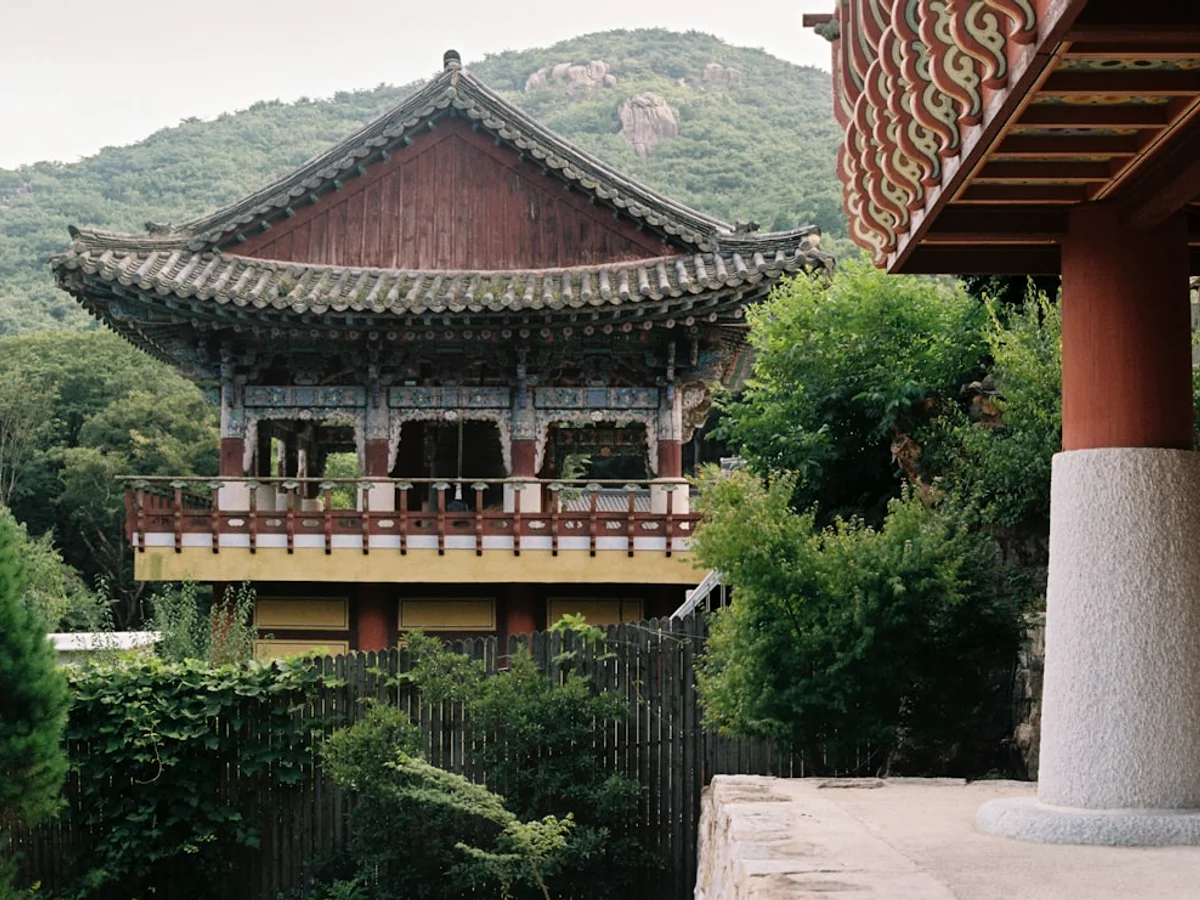
Understanding Insadong Shopping Guide: Finding Authentic Traditional Korean Crafts and Souvenirs
Searching for the real deal in Insadong means looking past the mass-produced plastic fans and keychains to find the specialized workshops hidden in the side alleys. It’s a place where you can find items ranging from 10,000 won trinkets to 5,000,000 won museum-quality moon jars. Essentially, it’s the cultural bridge between Seoul’s royal past and its high-tech present, serving as the primary hub for masters of traditional arts.
The Layout of the Land
When I first stepped out of Anguk Station Exit 6, I was honestly overwhelmed by the sheer number of signs. It’s easy to get sucked into the main street, which is broad and lined with shops that look quite similar. But the thing is, the real magic happens when you duck into the narrow paths that branch off like veins. I remember wandering into an alley no wider than my shoulders and finding a shop that only sold wooden masks. The smell of aged cedar was so strong it made my eyes water a bit, but in a good way.
- The main road is called Insadong-gil.
- Side alleys are often called “gal-bi” (rib) alleys because of their shape.
- Most shops open around 10:30 AM and close by 8:30 PM.
- Look for the “Registered Traditional Shop” signs on doorframes.
Beyond the Tourist Surface
You might wonder why some shops have items that look identical to what you’d find at a subway station kiosk. Well, some of them do cater to the quick-stop tourist crowd, which is a bit of a shame. However, the context of Insadong in Korean life is much deeper than that. It’s where families go to buy a traditional dojang (personal seal) for a child’s first birthday or where tea enthusiasts hunt for a specific type of fermented puerh tea. There was a level of reverence in how they touched the paper that you just don’t see in a modern stationery store. I still remember watching an elderly couple pick out a set of hanji (traditional paper) for their grandson’s wedding invitation. It’s this living connection to the Joseon Dynasty that keeps the neighborhood from becoming a total theme park.
- Craftsmanship: Many shopkeepers are designated “Human Cultural Assets.”
- Variety: You’ll find everything from antique furniture to contemporary jewelry.
- Heritage: The area was historically where the Dohwaseo (Office of Painting) was located.
How to enjoy Insadong Shopping Guide: Finding Authentic Traditional Korean Crafts and Souvenirs
To really enjoy shopping here, you have to slow down and treat it like a treasure hunt rather than a grocery run. It’s about the “modern adaptation” of things—seeing how a traditional motif like a peony is embroidered onto a sleek laptop sleeve. I’ve spent hours just poking around Ssamziegil, which is this spiral-shaped building where you don’t even have to use stairs to go up four floors.
Engaging with the Makers
One of my favorite things is watching the street performers, but the real participation happens inside the workshops. I once sat down for a 30-minute session to carve my own name into a stone stamp. It cost me about 35,000 won, and my hand was cramping by the end, but the result was so much more personal than anything I could have bought off a shelf.
- Try the DIY craft workshops in the basement of Ssamziegil.
- Don’t be afraid to ask, “Is this handmade?” (Hand-made-in-ga-yo?).
- Some potters will let you hold the pieces—just be incredibly careful.
- Most shops accept credit cards, but having some cash is better for small tea stalls.
The Customs of the Trade
Local customs are pretty straightforward, but there are some nuances. You don’t really haggle in the high-end galleries or the established tea shops. It’s not like a wet market where you fight over the price of fish. If you’re buying a hand-painted silk scroll for 150,000 won, that’s the price. I tried to ask for a discount once on a tea set, and the owner just looked at me with this polite but firm smile that made me feel like I’d just insulted his ancestors.
- Fixed pricing is the norm for high-quality goods.
- Small freebies (called service) are sometimes given if you buy a lot.
- Always receive your change or credit card with two hands.
- Taking photos is usually okay, but it’s polite to ask first.
Finding Modern Twists
Honestly, I was surprised by how “cool” traditional stuff can look when it’s modernized. There are these stores that sell hanbok that you can actually wear to work—they call it “living hanbok.” I bought a navy blue linen vest for around 60,000 won, and I wear it all the time back home. It doesn’t look like a costume; it just looks like a sharp, unique piece of clothing.
- Lifestyle Shops: Look for stores like “Moo-yoo” for minimalist pottery.
- Accessory Design: Modern jewelry using traditional knots (maedup).
- Stationery: Hanji paper transformed into lampshades or journals.
Best time for Insadong Shopping Guide: Finding Authentic Traditional Korean Crafts and Souvenirs
The best time to visit depends entirely on whether you want the energy of the crowd or the silence of the galleries. If you go on a Saturday around 2 PM, the main street is blocked off from cars, and it becomes a massive pedestrian party. Here’s the thing: there are people making kkultarae (king’s dessert) where they stretch honey into 16,000 strands, shouting rhythms that get stuck in your head for days. Not gonna lie, this was pretty impressive. The sound of traditional music drifted through the air.
Seasonal Shifts and Vibes
I still remember visiting in late October. The ginkgo trees along the outskirts of the district were dropping these bright yellow leaves everywhere. It was a bit chilly, maybe 12 degrees Celsius, so ducking into a traditional wooden tea house felt like the best decision I’d ever made. The smell of roasting ginger and jujube in the air during autumn is just… you can’t describe it. It’s warm and earthy.
- Spring (April-May): Great for outdoor performances and mild weather.
- Autumn (October-November): Best for the aesthetic and tea-drinking vibes.
- Weekdays: Visit before 1 PM to have the shops to yourself.
- Avoid: Extremely rainy days, as many vendors won’t display their best paper or silk goods.
Special Occasions and Festivals
During Chuseok (Korean Thanksgiving) or Seollal (Lunar New Year), Insadong feels different. Some shops close, but the ones that stay open often have traditional games like yutnori set up outside for anyone to play. I tried playing once and lost miserably to a seven-year-old, much to the amusement of a crowd of onlookers.
- Insadong Traditional Culture Festival: Usually held in the fall.
- Buddha’s Birthday: The lotus lantern parades nearby make the evening magical.
- Weekend Pedestrian Hours: Saturdays 2 PM - 10 PM and Sundays 10 AM - 10 PM.
Why is Insadong Shopping Guide: Finding Authentic Traditional Korean Crafts and Souvenirs significant?
It’s where the soul of the Joseon era (which lasted over 500 years!) still breathes. If you want to understand the Korean aesthetic—the “beauty of empty space”—you find it in the curve of a white porcelain jar here. Insadong is significant because it acts as a cultural anchor in a city that’s moving toward the future at breakneck speed.
A Historical Sanctuary
Historically, this was the residential area for government officials and the elite. When the Japanese occupation happened, the wealthy families were forced to sell their belongings, and that’s how the antique shops started popping up. It’s a bit of a heavy history, actually. I was talking to a shop owner near the Kyoung-in Museum of Fine Art, and he told me that his grandfather started their shop by salvaging old roof tiles.
- It preserves the “Middle Class” (Chungin) history of Seoul.
- The architecture—many buildings still have traditional hanok roofs.
- It’s a hub for the “slow life” movement in Korea.
Social and Modern Relevance
In modern Korea, where everything is digital and fast, Insadong is where people go to reconnect with something tactile. There’s a certain social status to owning a piece from a famous Insadong kiln. But it’s also about jeong—that uniquely Korean feeling of attachment and affection. I remember seeing a young student buying a tiny, hand-made ceramic cat. It was prettyn’t expensive, maybe 8,000 won, but she spent ten minutes talking to the artist about how it was made. That interaction?, but that’s why this place matters. Pro tip from experience: it’s not a sterile mall; it’s a conversation. The only downside was
- Identity: Helps younger generations connect with their roots.
- Economic Support: Keeps traditional artisans in business.
- Global Gateway: It’s the first place many foreigners see “Real Korea.”
Best places for Insadong Shopping Guide: Finding Authentic Traditional Korean Crafts and Souvenirs
If you want the good stuff, you need to know which buildings to enter. Between us, Ssamziegil is the most famous, and for good reason—it’s full of young designers. But if you’re looking for high-end pottery or museum-quality paper, you have to go deeper. I found this one place called Tong-in Store that has been around since 1924. It feels like stepping into a vault. I’d pick this over other options any day.
Hidden Gems and Hotspots
For tea, you absolutely have to find the Shin Old Tea House. It’s hidden at the end of a long, dark alley. When you walk in, you’re asked to take off your shoes and sit on the floor. I ordered the “Ssanghwa-cha,” which is this thick, bitter medicinal tea with nuts floating in it. It cost about 9,000 won, and honestly, it tasted like dirt at first, but by the third sip, I felt like I could run a marathon.
- Ssamziegil: Best for “cute” and modern crafts.
- Anyoung Insadong: A newer complex with more “trendy” traditional goods.
- Goun-daseong: Excellent for hand-made tea ceramics.
- National Souvenir Center: Reliable quality, though a bit more formal.
Off-the-Beaten-Path Options
Don’t ignore the second floors! In Korea, some of the best shops are upstairs. I once followed a small wooden sign up a creaky staircase and found a studio dedicated entirely to Pansori (traditional opera) fans. The walls were covered in giant fans painted with tigers and mountains. Each one was a work of art, priced around 120,000 won.
- Galleries: Walk into any door that says “Gallery”—most are free to enter.
- Paper Alley: Look for the shops near the Jogyesa Temple side for the best hanji.
- Antique Street: The area closer to Tapgol Park has the more “dusty” but authentic antiques.
Tips for Insadong Shopping Guide: Finding Authentic Traditional Korean Crafts and Souvenirs
First thing: check the labels. If you see a beautiful silk fan for 3,000 won, it’s probably not made in Korea. Now, there’s nothing wrong with a cheap souvenir. If you want “authentic,” you should expect to pay at least 15,000 to 20,000 won for a decent fan. What surprised me was i learned this the hard way when the “silk” on my cheap fan started peeling off before I even got back to my hotel. Take the second alley on the left.
Practical Advice for the Savvy Buyer
If you’re buying something heavy like a celadon vase, most high-end shops will offer international shipping. It’s expensive—sometimes 80,000 won or more—but it’s better than trying to stuff a fragile pot into your suitcase and praying to the airline gods. Also, look for the Tax-Free sign. If you spend over 30,000 won, you can get a refund on the VAT at the airport or at kiosks in the city.
- Look for the “K-Craft” or “Good Design” marks.
- Bring your passport if you want to do the immediate tax refund.
- Visit Jogyesa Temple nearby for a quiet break after shopping.
- Use the T-money card for easy transport to and from the area.
Budgeting for Quality
How much should you spend? Well, you can get a beautiful set of metal chopsticks for 10,000 won. A handmade tea cup might be 25,000 won. A high-quality calligraphy set will probably start at 50,000 won. I here set a budget of 100,000 won for an afternoon in Insadong, which covers a nice lunch, a tea session, and one or two high-quality items.
- Pottery: Small cups are affordable; large jars are for serious collectors.
- Tea: Buy the loose-leaf stuff, not the tea bags, for the real flavor.
- Stationery: Hanji notebooks make the best gifts because they are light and beautiful. The vibe in the evening is my favorite. As the sun goes down, the orange glow of the streetlights hits the wooden eaves of the shops, and the crowds thin out. You can hear the distant sound of someone playing a gayageum (traditional zither) from a nearby restaurant. I’d pick this over other options any day. It makes you realize that even in a city of ten million people, you can still find a quiet corner of the past if you know where to look. Honestly, just get lost, and the best things i’ve found in insadong were the things i wasn’t looking for. If you ask me,