Understanding Korean Motels vs Hotels: A Guide to Affordable Luxury and Amenities for Tourists
Basically, the line between a “motel” and a “hotel” in Korea is super blurry, but motels usually offer way more bang for your buck tech and amenities. From what I observed, while hotels give you that classic lobby and breakfast buffet experience, motels are these neon-lit havens where you get high-end gaming PCs, massive bathtubs, and every skincare product known to man for half the price. It’s not about the “shady” vibe you might expect from western motels; in Korea, they’re legitimate, tech-heavy lifestyle spaces. Honestly, I was surprised when I walked into a room near Sinchon Station and found a 65-inch TV, a heated toilet seat, and a desktop computer that was faster than my laptop at home. Not gonna lie, the room was spotless. When I first visited Seoul back in 2016, I was terrified of staying in a “Love Motel.” I thought it would be, you know, weird or dirty. I remember thinking, “Why did I pay double for that cramped business hotel last night?” The air smelled faintly of high-end air freshener and that specific “new building” scent that seems to permeate modern Korean architecture.
The Tech and Amenities Factor
The sheer amount of stuff you get in a Korean motel room is wild. You don’t just get a bar of soap; you get a whole kit. I’m talking about a sealed pouch containing everything from hair wax and face toner to specialized cleansers and even hair ties. Most mid-range motels around 45,000 to 60,000 KRW will have:
- High-spec Gaming PCs (sometimes two side-by-side)
- Massive Whirlpool tubs that can fit two people easily
- Stylers (those tall LG closets that steam-clean your clothes)
- High-end hair dryers and sometimes even flat irons
- A fridge stocked with free water, canned coffee, and maybe a corn silk tea I spent three hours just watching Netflix while lying on the Ondol (heated floor) because it felt so much better than the bed. I still remember staying at a place in Suwon that had a literal projector instead of a TV. Thing is, you won’t find this level of “random luxury” in a standard 3-star business hotel where you usually have to pay for an extra bottle of water. Honestly it was surprisingly empty when I visited.
Space and Vibe
Hotels in Korea, especially the business ones in areas like Myeongdong, are notoriously tiny. You can barely open your suitcase on the floor. Motels, however, often have way more floor space. The vibe is different, though. Hotels are bright and corporate. Motels have dim hallway lighting, maybe some funky wallpaper, and a much more private check-in process.
- Check-in is often via a kiosk or a small window where you barely see the staff.
- The hallways are quiet—like, eerily quiet—because people value their privacy here.
- You get a key card, but sometimes the door just unlocks via a code sent to your phone.
- The slippers are always there, waiting by the door, because wearing shoes inside is a total no-go.
Where can you find Korean Motels vs Hotels: A Guide to Affordable Luxury and Amenities for Tourists?
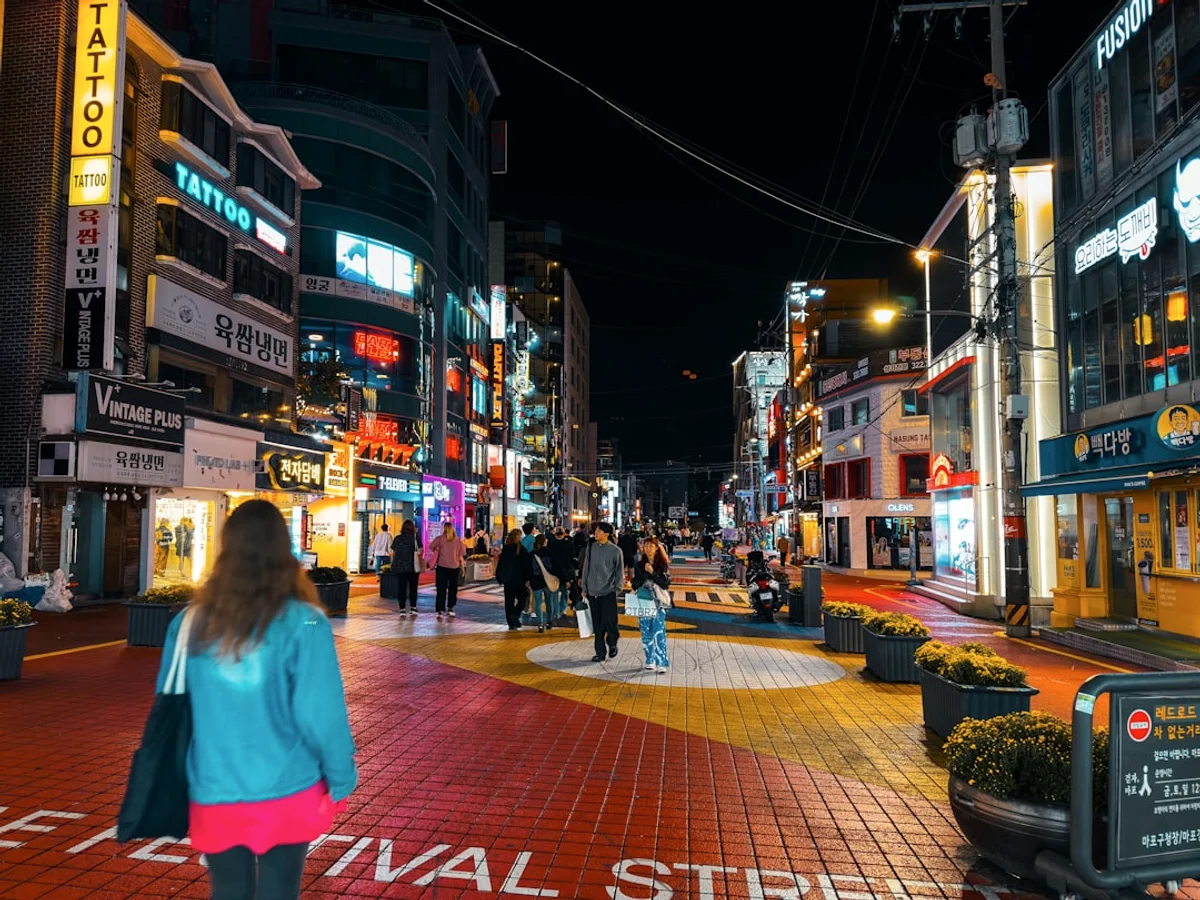
If you look up and see a building with colorful neon lights or a sign that says “모텔” (Motel) or “호텔” (Hotel) — though many motels now call themselves “Boutique Hotels” to sound fancier — you’re in the right place. You can find these places literally everywhere there’s a cluster of buildings and a subway station nearby. They cluster in “motel alleys” near nightlife districts. What stood out was every building was a different theme. I once wandered into an alley behind Yeongdeungpo Station around 11 PM and was overwhelmed by the sheer number of options. One looked like a castle, another like a modern art museum. It’s funny because you’ll see a grandma selling spicy rice cakes right next to a 10-story boutique motel with a flashy LED facade. The contrast is just peak Korea. Look for the big sign near the corner.
Local Hotspots and Clusters
If you want the best “tourist-friendly” motels, you should head to areas where students or young professionals hang out. These places are competitive, so they keep their rooms updated and clean to attract the younger crowd.
- Hongdae/Sinchon: Tons of “Boutique” options that feel like trendy cafes.
- Jongno: Great for finding renovated motels that are close to the palaces.
- Gangnam: A bit more expensive, but the “luxury” motels here are basically 5-star suites.
- Busan (Seomyeon): Incredible value here; I found a room with a massage chair for 55,000 KRW.
Finding the “Hidden” Gems
Don’t just stick to the main roads. The best deals are sometimes one or two blocks back from the primary thoroughfare. I found a place in Daegu that was tucked behind a fried chicken shop. It was half the price of the hotel on the main street and had a private terrace.
- Look for the “Unmanned” (무인) signs if you’re shy; these are fully automated.
- Check the “Motel Alleys” (모텔촌) which are here located near the “back gate” of major train stations.
- Use your eyes—if the building looks new and the entrance is clean, the rooms are probably great.
- Avoid the ones that look like they haven’t been painted since 1992.
- Look for “Excellent” or “Good” stickers from booking apps on the front door.
How to enjoy Korean Motels vs Hotels: A Guide to Affordable Luxury and Amenities for Tourists
Koreans call this “Hocance” (Hotel + Vacance), and they do it with motels too. To really “enjoy” a Korean motel, you have to lean into the “stay-cation” culture. You aren’t just there to sleep; you’re there to order a mountain of fried chicken, soak in a bubble bath. Watch a movie on a screen the size of a wall. There’s this unique vibe you can’t describe. I didn’t want to sightsee, so I checked into a motel at 2 PM for a “day-use” (Dae-sil). I spent the afternoon wearing the provided oversized robe, drinking the free pear juice from the mini-fridge, and listening to the rain hit the window. I remember one rainy Tuesday in Incheon. It felt more like a spa day than a budget stay. I’d pick this over other options any day.
Delivery Culture is Key
One of the best things about motels is that they’re totally fine with you ordering food. Unlike some high-end hotels that get weird about delivery drivers in the lobby, motels are built for this.
- Download Baemin or Coupang Eats (you might need a local number, or ask the front desk to help).
- Tell the driver your room number or meet them at the ground floor entrance.
- Use the small table and chairs provided in the room—they are there for a reason!
Navigating the “Dae-sil” vs “Suk-bak” System
This part is crucial because it confuses everyone at first. Motels operate on two different time systems. Dae-sil (대실) is for short stays ( 3-4 hours) during the day. Suk-bak (숙박) is for staying overnight.
- If you check in at 3 PM, they might assume you want a 4-hour stay unless you specify overnight.
- Overnight check-in for motels is sometimes quite late—sometimes 6 PM, 8 PM, or even 10 PM on weekends.
- If you arrive early with bags, most places will let you leave them at the desk, but don’t expect to get into your room at noon like a Western hotel.
Best time for Korean Motels vs Hotels: A Guide to Affordable Luxury and Amenities for Tourists
Prices are low, rooms are plentiful, and you can get a “VIP” room for the price of a “Standard” one. But once Friday night hits? Timing is everything in the world of Korean accommodation, and weekdays (monday through thursday) are the golden era for tourists. Everything changes. I still have nightmares about trying to find a room in Busan during the Fireworks Festival. I walked for two hours, and every single “Full” sign was lit up in red. I’d say I went around 3 PM. The one place that had a room wanted 250,000 KRW for a tiny box that cost 50,000. I ended up sleeping in a Jimjilbang (bathhouse) that night. Not my best moment, but a lesson learned. I wasn’t completely sold on this.
Seasonal Considerations
Korea has four distinct seasons, and the motels adapt to them beautifully. You have to experience the Ondol (floor heating) in the winter. It’s a dry, cozy heat that makes you want to never leave the floor.
- Winter: The floor heating is a godsend after walking in sub-zero temperatures.
- Summer: The AC is here industrial-strength; you can turn your room into a freezer in five minutes.
- Monsoon Season (July): Best time for a “stay-cation” when it’s too wet to be outside.
- Public Holidays (Chuseok/Lunar New Year): Book weeks in advance or you’ll be stranded.
When to Book vs. Walk-in
If you’re in a popular area like Gangnam or Hongdae, don’t just walk in on a Saturday night. You’ll either be turned away or overcharged.
- Weekdays: Walk-ins are fine and occasionally cheaper because you can haggle a tiny bit or see the room first.
- Weekends: Use an app (like Agoda or Booking.com) at least 2 days before.
- Special Events: If there’s a concert or festival nearby, the prices will triple. I saw this happen in Suwon during a baseball playoff game—it was madness.
Why is Korean Motels vs Hotels: A Guide to Affordable Luxury and Amenities for Tourists significant?
Because many young Koreans live with their parents until marriage, they need a “third space” that isn’t a loud cafe or a public park. Motels evolved to fill this gap, becoming private sanctuaries. The significance lies in how these spaces reflect Korean social life. Over time, this drove the quality up so high that they became a viable alternative for tourists who want luxury without the “Grand Hyatt” price tag. You’ll notice the smell of incense as you enter. Now, you see friends booking a “Party Room” in a motel to celebrate birthdays with balloons and cake. What nobody tells you is i once saw a group of three girls carrying giant “2” and “5” balloons into a motel in Bundang. Honestly, the cultural shift is fascinating, but twenty years ago, people would look down at their shoes when entering a motel. They weren’t there for anything “shady”—they were just there to have a private party. This was actually better than I expected.
Historical Evolution
Motels started as basic “Yeogwan” (inns). Then came the “Love Motel” phase in the 80s and 90s, characterized by gaudy decor and round beds. But the modern “Boutique Motel” is a different beast entirely.
- Privacy: Koreans value “Chemyon” (saving face), so discreet entrances are a historical design choice.
- Innovation: The fierce competition between motels led to the inclusion of PCs, Stylers, and high-end toiletries.
- Urban Density: In crowded cities, these are the only affordable “private” spaces available.
Modern Relevance for Tourists
For a traveler, these places are a window into the “real” Korea. You get to use the same tech and amenities that locals use. It’s much more “local” than staying in a Hilton where the staff all speak perfect English and the breakfast is just scrambled eggs and bacon.
- You experience the high-tech lifestyle firsthand (smart toilets, lighting controls).
- You see the efficiency of Korean service—everything is designed to be fast and frictionless.
- It supports local small businesses rather than giant international chains.
Pitfalls to avoid
The biggest mistake people make is assuming all motels are created equal. They are definitely not. You can find a “designer” motel that feels like a palace, and right next door, there’s a “vintage” one that smells like twenty years of cigarette smoke and damp carpets. I’ve definitely had my fair share of “oops” moments. The sound of traditional music drifted through the air. I once booked a place in Gyeongju that looked great in photos but, man, the smell of stale smoke was so thick I could almost taste it. I tried to open the window, but it just faced a brick wall two inches away. I ended up leaving after an hour and losing my 40,000 KRW because I just couldn’t breathe. One local explained that it taught me to always check the “recent” reviews, specifically for the word “tobacco” or “smell.” Colorful decorations caught my eye everywhere. I was there for about 2 hours.
The “Late Check-in” Trap
This is the one that gets most Western tourists. Most hotels have a 3 PM check-in. Motels, especially on weekends, might not let you in until 8 PM or 10 PM because they prioritize “day-use” customers who pay for 4-hour slots during the afternoon.
- Always check the check-in time on the booking page. It’s buried in the fine print.
- Don’t expect a “concierge” to help with your bags all day; some places have no storage area.
- If you check in at 10 PM, you still have to check out by 11 AM or 12 PM the next day. It feels short, but that’s the system.
The “Slightly Weird” Amenities
Sometimes the amenities are a bit… much. You might find a condom in your “amenity kit” or adult channels on the TV menu. Don’t freak out. It doesn’t mean the place is “dirty”; it’s just part of the “Love Motel” legacy that still lingers in the business model.
- Don’t be surprised by transparent bathroom walls. I don’t know why, but it’s a huge design trend in Korean motels. If you’re traveling with a friend, check the room photos carefully!
- Watch out for the lighting controls. they’re here on a single touch-panel near the bed. If you can’t find the light switch by the door, it’s probably on that panel.
- The “Free Drinks” in the fridge are yours, but don’t drink the tap water unless there’s a specific water purifier (Jung-su-gi) in the room.
Tips for Korean Motels vs Hotels: A Guide to Affordable Luxury and Amenities for Tourists
If you want to master the art of the Korean motel stay, you need to download a few apps. During my visit, Yanolja and Yeogi-eottae are the big ones. I wasn’t completely sold on this. They are in Korean, yeah, but the interface is pretty visual. You can see the “Score” (out of 10) and look at photos that are here 90% accurate. Actually, a great tip I learned from a local friend is to look for the word “Boutique” or “Hotel” (written in Hangul as 호텔) in the title. These places are trying to distance themselves from the old-school motel image and here have much better cleaning standards. I used this trick in Daegu and found a room with a literal private sauna for 70,000 KRW. Not gonna lie, it was the best sleep I had in three weeks of traveling. The whole thing took maybe 30 minutes.
Practical Advice for Foreigners
Most motel owners don’t speak much English. It’s just the reality. But they are very tech-savvy.
- Have Papago (translation app) ready on your phone.
- Take a photo of the building so you can find your way back; these alleys look identical at 2 AM.
- Keep a 10,000 KRW bill in your pocket. Sometimes, if you want a slightly better room or a late check-out, a little extra cash (and a polite ask) goes a long way.
Sensory Checklist
Before you commit to a room, especially as a walk-in, ask to see it first. Most owners will let you take a quick peek.
- Smell: Sniff for smoke or heavy perfume (which occasionally masks smoke).
- Sound: Listen for the elevator or nearby construction. Motels near train tracks can be noisy.
- Bed: Sit on it. Some Korean beds are “hard as a rock” (which some people love for their backs, but others hate).
- Use the KakaoTaxi app to get to motels in weird locations; it’s much safer than wandering.
- Look for the “Certified Clean” stickers on the door—some local governments actually inspect these places now.
- Always check the “Amenities” bag for a small tube of toothpaste—it’s way better than the tiny packets you get in hotels.