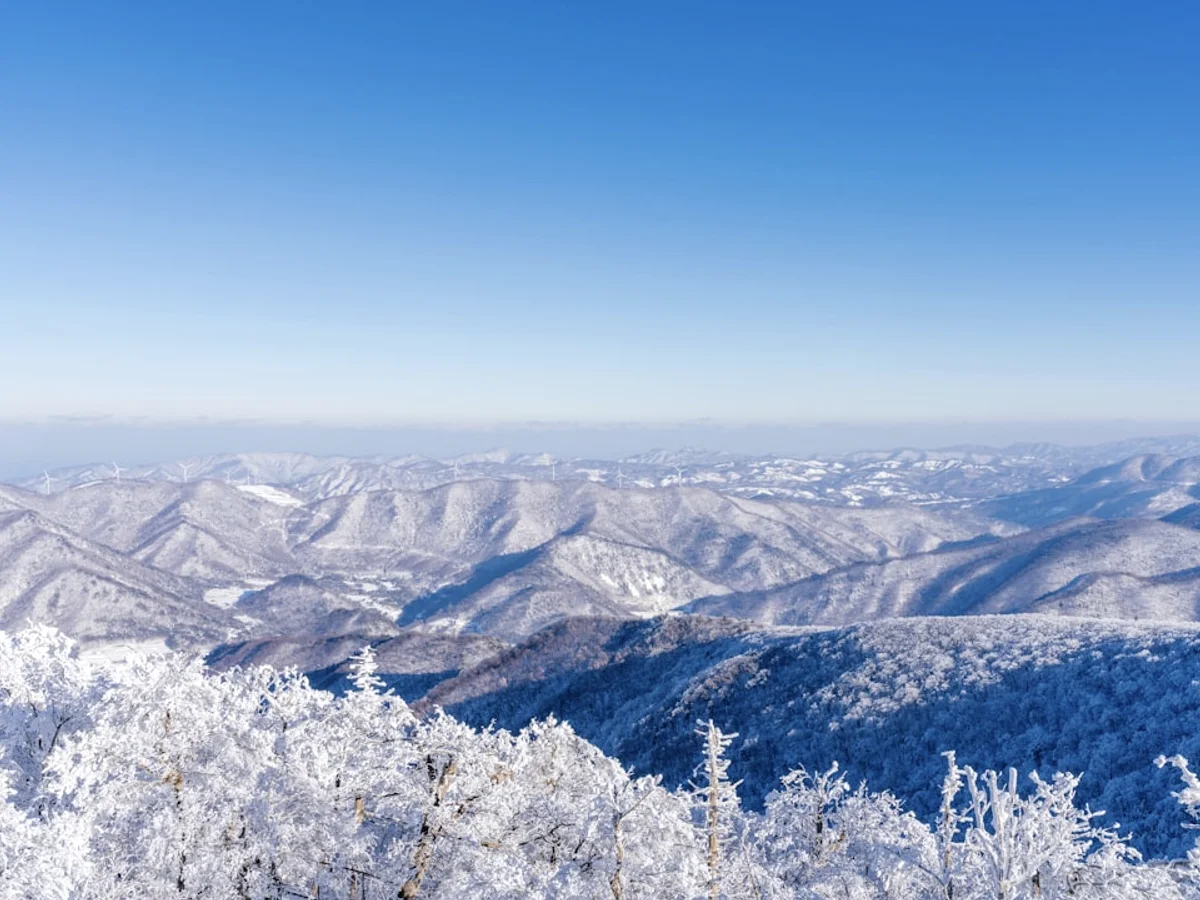
Introduction to Korean Winter Survival Guide: Ice Festivals, Ski Resorts, and Hot Springs
Think of a Korean winter not as a season to hide from. As an extreme sport where you alternate between freezing your eyebrows off and boiling yourself alive in a herbal bath. It’s essentially a three-part ritual: catch a fish with your bare hands on a frozen river, shred some powder at 2 AM, and then fall asleep on a heated floor with a towel wrapped around your head. I’d definitely recommend checking this out.
Freezing for Fun
Honestly, I thought people were joking when they told me about the Hwacheon Sancheoneo Ice Festival. Standing on a frozen river in Gangwon-do province, waiting for a trout to bite through a tiny hole in the ice? It sounds miserable, but the energy is infectious. I still remember my first time there—it was maybe -10°C, and I couldn’t feel my toes, yet I was grinning like an idiot because I finally caught a fish after two hours of staring at the ice. You grill it right there on giant communal grills, and that smoky, fresh trout tastes infinitely better because you suffered for it.
- Hwacheon Sancheoneo Festival: usually runs from early January to early February.
- Bare-hand fishing: A wild event where people jump into an icy pool in t-shirts and shorts (I skipped this, way too cold!).
- Ice sledding: Rent a traditional sled for about 5,000 won and race around on the ice.
Night Skiing is a Vibe
The thing about skiing here’s the convenience. You don’t need a massive expedition. Resorts like Vivaldi Park or Konjiam Resort are just an hour or so from Seoul. When I lived in Gangnam, we’d sometimes just decide at 7 PM to go skiing, hop on a shuttle, and be on the slopes by 9 PM. The slopes are lit up brighter than a baseball stadium, and the snow is usually groomed to perfection—though, honestly, it’s mostly artificial snow, so it can be a bit icy if you fall.
- Look for free shuttle buses from major subway stations (booking in advance is required).
- Renting gear is standard; almost no one brings their own equipment unless they’re pro.
- Expect crowds on weekends—I go on Tuesday nights to avoid the long lift lines.
The Ultimate Thaw
You can’t talk about surviving winter without the jimjilbang. It’s not just a sauna; it’s a social lifeline. After a day in the biting wind, walking into that humid, herbal-scented heat feels like a religious experience. My favorite routine involves grabbing a cup of iced Sikhye (sweet rice drink) and some Maekbanseok (roasted eggs) and just lying on the hot salt rocks until my muscles stop screaming. It’s cheap, too—often around 12,000 to 15,000 won for 12 hours of warmth. The only downside? Sometimes the snoring in the sleeping rooms can get pretty loud.
How to enjoy Korean Winter Survival Guide: Ice Festivals, Ski Resorts, and Hot Springs
Winter in Korea isn’t just about enduring the Siberian winds; it’s about rotating between freezing your face off at outdoor festivals and aggressively thawing out on heated floors. I noticed that you essentially embrace the extreme cold for the fun of it, then retreat to steaming baths to recover, with some roasted eggs in hand.
Catching Trout on a Frozen River
Honestly, it was surreal seeing thousands of people standing on a frozen river, staring intensely into tiny holes. I still remember stepping onto the ice at the Hwacheon Sancheoneo Ice Festival for the first time. The wind was biting—my toes went numb within twenty minutes despite wearing double wool socks—but the energy was infectious. It’s not just about fishing; it’s a test of patience and endurance. When someone nearby actually caught a mountain trout, the whole crowd cheered like they’d won the lottery. If you go, don’t just stand there shivering, and you have to participate in the local rituals to actually stay warm.
- Gear up: Buy a cheap rod on-site for about 5,000 won, but bring your own chemical hand warmers.
- Eat your catch: Take your fish to the grilling center immediately; they’ll cook it for a small fee (here 3,000 won).
- Check the ice: The festival often runs from early January to early February, depending on ice thickness.
Night Skiing and Convenience Store Ramyeon
Skiing here is.. — efficient. It’s less about expansive wilderness and more about maximizing time on the slopes. Since many resorts like Vivaldi Park or Konjiam Resort are just an hour or so from Seoul, the crowds can be intense on weekends. Personally?, and i’d pick night skiing over a day trip any time. There’s something magical about carving down a lit-up slope at 10 PM while K-pop blasts over the PA system. The snow might be mostly artificial, but the vibe is 100% genuine. I noticed that i remember sitting at the base of the mountain around midnight, eating a cup of spicy ramyeon from the convenience store. The steam hit my cold face, and it was practically spiritual. There’s this distinct scent that hits you.
- Book the shuttle: Most major resorts offer free or cheap shuttle buses from Seoul Station or Hongdae.
- Go on a weekday: Lift lines can take 30-40 minutes on Saturdays but are nearly empty on Tuesday mornings.
- Rent clothes: Don’t pack bulky gear; rental suits are available everywhere for roughly 20,000 won.
The Jimjilbang Recovery
You haven’t survived winter until you’ve spent a night sleeping on a hard floor in a sauna. Locals mentioned that the jimjilbang is the ultimate equalizer, and rich, poor, local, tourist—everyone looks the same in those orange cotton pyjamas. When I first walked into the bathing area, I was admittedly shocked by the casual nudity. First time I went, it’s the only place where it’s socially acceptable to nap anywhere you want. But once you sink into a 42°C mugwort bath, the awkwardness melts away. The heat—oh man—it penetrates right to your bones. I here spend about four hours just cycling between the hot charcoal kiln and the ice room. Make sure you grab the essential snacks while you dry off:
- Sikhye (Rice Punch): Sweet, icy, and absolutely necessary for hydration (approx. 4,000 won).
- Maekbanseok Eggs: These brown, sauna-roasted eggs have a nutty flavor you can’t get anywhere else.
- Yangmeori: Ask a local to show you how to fold your towel into a “sheep head” hat; it’s practically mandatory for selfies.
When to experience Korean Winter Survival Guide: Ice Festivals, Ski Resorts, and Hot Springs
The significance of Korea’s intense winter culture really boils down to a collective defiance against the brutal Siberian winds that sweep down the peninsula. It’s not just about surviving the freeze; it’s about transforming a harsh season into a period of communal warmth and high-energy activity to keep the “winter blues” at bay. It’s right by exit 3.
Embracing the Deep Freeze
You know what? I used to think I knew what cold felt like until I stood on a frozen river in Gangwon-do. Historically, Koreans have had to be incredibly resilient. The winters here are dry and biting, unlike the wet cold of Europe. This gave rise to festivals like the Hwacheon Sancheoneo Ice Festival, which feels less like a fishing trip and more like a test of will. When I first visited, I honestly couldn’t understand why thousands of people were staring into tiny holes in the ice at -10°C. First time I went, but then I caught my first mountain trout, but the adrenaline rush—and the immediate gratification of grilling it right there—made sense of everything. It’s a modern celebration of the hunter-gatherer roots that kept ancestors alive.
- Community Bonding: It’s rarely a solo activity; entire families huddle together.
- Yi-yeol-chi-yeol: A concept of “fighting heat with heat,” but flipped here to fighting cold by embracing the ice.
- Food Culture: Winter street food like bungieoppang (fish-shaped pastry) tastes infinitely better when you’re shivering.
The Midnight Ski Culture
Modern Korea is obsessed with efficiency and accessibility, and the ski culture reflects that perfectly. Since 70% of the country is mountainous, you don’t need a week-long holiday to hit the slopes. Resorts like Vivaldi Park or Konjiam Resort are just an hour or so from Seoul, making them massive social hubs. Instead, the “night skiing” lanes were packed. The snow was crisp, the lights were blindingly bright, and the energy was infectious. I remember heading to a resort at 2 AM on a Friday night, expecting it to be dead. It’s a huge part of the “work hard, play hard” mentality. Young Seoulites flock here not just for the sport, but to escape the suffocating pressure of city life. The only downside? The lift lines can be brutal on weekends, sometimes waiting 20 to 30 minutes just for a 5-minute run. The energy there was infectious.
The Communal Warmth of the Jjimjilbang
If the festivals and slopes are about expending energy, the jjimjilbang (public bathhouse) is where that energy is restored. This isn’t just a spa; it’s a cultural institution rooted in the concept of Jeong (deep affection/connection). Historically, when hot water was scarce, bathing was a communal event, and that lack of privacy actually fosters a weirdly comforting sense of equality.
- Scrubbing culture: Getting a seshin (professional scrub) for about 20,000 to 30,000 won removes layers of dead skin you didn’t know you had.
- Sleeping on the floor: The heated ondol floors roast your back in the best way possible.
- Snacking: Cracking hard-boiled eggs on your friend’s head—yes, really—is a rite of passage. Personally, walking into a room full of naked strangers was terrifying the first time. But once I sank into a mugwort bath heated to exactly 42°C, I got it. I’d pick this over other options any day. The smell of the herbal water and the sound of splashing water… it washes away the stress of the modern grind. During my visit, it’s affordable luxury, costing under 15,000 won for entry, making warmth accessible to everyone, from CEOs to students. I’d say It’s right by exit 3.
Best places for Korean Winter Survival Guide: Ice Festivals, Ski Resorts, and Hot Springs
If you’re looking for the absolute best winter experiences in Korea, you need to head straight for Gangwon-do Province for the deepest snow and best ski slopes like High1 Resort. I gotta say, for a truly unique cultural shock, the Hwacheon Sancheoneo Ice Festival is unbeatable for ice fishing, and afterwards, nothing saves you from the biting cold quite like a traditional Jimjilbang sauna. This was actually better than I expected. The fragrant smell of street food was everywhere.
The Ice Fishing Phenomenon
When I first arrived at the Hwacheon Sancheoneo Ice Festival, the first thing that hit me wasn’t the sight of thousands of people standing on a frozen river—it was the smell of grilling trout wafting through the freezing air. Honestly, it’s a bit surreal. You’re standing on ice that’s at least 40cm thick, staring into a tiny hole, waiting for a fish to bite. It requires patience I didn’t know I had. I remember shivering there at 9 AM, wondering if it was worth it, until I finally felt that tug on the line. The victory of catching your own lunch is sweet, but getting it grilled fresh right there? That’s the real prize.
- Timing is key: arrive before 10:00 AM to beat the massive tour bus crowds.
- Cost: Entrance is roughly 15,000 KRW, but they give you a 5,000 KRW voucher for local snacks.
- Gear: Don’t buy expensive stuff; the cheap plastic rods sold on-site work just fine.
Hitting the Slopes
Skiing in Korea is… different. It’s incredibly convenient, occasionally with night skiing that goes until 4 AM. While Vivaldi Park is super popular because it’s only an hour from Seoul, I tend to avoid it on weekends. The lift lines can be brutal—I’m talking 40-minute waits for a 5-minute run. If you have the time, taking the 3-hour bus out to High1 Resort or Yongpyong is infinitely better. The snow quality is actual powder rather than icy patches, and you have way more room to breathe.
- Look for the foreigner shuttle bus packages; they sometimes include lift tickets at a huge discount.
- Rent your clothes and gear at the shops outside the resort entrance to save about 30-40%.
- definitely try the churros at the mid-mountain snack bar—they taste magical in the cold.
The Ultimate Thaw
After a day out in the biting wind, fancy hotel spas are nice, but they lack soul. I prefer the local neighborhood spots. There’s a particular Jimjilbang I stumbled upon near Dongdaemun—tucked away in a basement, smelling faintly of pine and roasted eggs. It wasn’t glamorous. But lying on the scorching hot Hwangto (yellow clay) floor, feeling the heat seep into my frozen bones? pure heaven. You just grab a towel, make a “Yang Mori” (sheep head) hat, and pass out on the floor with everyone else. It’s communal, it’s hot, and at 12,000 KRW, it’s the best therapy money can buy.
Why do Koreans love Korean Winter Survival Guide: Ice Festivals, Ski Resorts, and Hot Springs?
If you want the absolute truth about enjoying Korean winter without turning into a miserable icicle, aim for mid-January. I know, sticking to the coldest weeks sounds crazy. That’s exactly when the river ice at Hwacheon is thick enough (over 20cm) to stand on safely, and the ski slopes have that perfect powder instead of the sad, wet slush you get in early December.
Timing Your Day Right
I learned this the hard way: never, and I mean never, go to the Sancheoneo Ice Festival on a Saturday afternoon unless you enjoy standing in line for three hours just to look at a hole in the ice. The best strategy? Get there right when the gates open at 9:00 AM. When I did this, the air was crisp, the crowds were thin, and the trout were actually biting because they hadn’t been spooked by thousands of people yet. By 1:00 PM, when the tour buses flooded in, I was already grilling my catch and warming up with fish cakes. For skiing, though, I actually prefer the night pass. Between us, most resorts near Seoul like Vivaldi Park or Konjiam offer late-night skiing from 8:00 PM to midnight, and the vibe is totally different. It’s in the basement level.
- Morning (9 AM - 11 AM): Best for ice fishing; fish are active and lines are short.
- Lunch (12 PM - 2 PM): Slopes get super crowded; this is the perfect time to retreat to a warm indoor cafe or Jjimjilbang.
- Night (8 PM+): Less crowded slopes, shorter lift lines, and tickets are 30-40% cheaper.
The Seollal Variable
You really need to check the calendar for Lunar New Year (Seollal), which sometimes falls in late January or early February. When I first visited during Seollal, I thought, “Great, everyone’s home with family, the ski resorts will be empty!” Big mistake. Huge. Half of Korea had the same idea. The highway traffic out of Seoul was a nightmare—a here 90-minute drive took me nearly five hours. You know what surprised me though? Seoul itself feels like a ghost town during the holiday. It’s kind of eerie but cool if you want to explore Gyeongbokgung Palace without a million people photobombing you.
Catching the Peak Cold
It sounds counterintuitive to chase the freezing temperatures, but winter activities in Korea live or die by the thermometer. If you go too early in December, many ski runs aren’t fully open yet, and they rely heavily on artificial snow. It’s just… icier. Harder to carve. My knees still remember the impact from slipping on a patch of ice at Bears Town in late November.
- Late December: Festive lights are up, but snow quality is hit-or-miss.
- January 5 - February 10: The golden window. Hwacheon River is frozen solid, and the Jjimjilbangs are at their coziest.
- Late February: Avoid if possible. The afternoon sun turns snow into slush by 2 PM, and the ice festivals start closing down due to safety risks. And look, after spending a day out in -15°C wind, nothing beats the sensory overload of a Jjimjilbang. Walking into the main hall, getting hit by the smell of roasted eggs and the dry heat of the clay sauna—it’s instant relief. I head there around 6 PM to thaw out before dinner. Just bring cash (about 15,000 won) and leave your modesty at the door. Personally, I think this is worth it. Look for the big sign near the corner.
Common mistakes with Korean Winter Survival Guide: Ice Festivals, Ski Resorts, and Hot Springs
Survival requires strategy here, not just a thick coat. The winters in Korea are dry and piercing, the kind that sneaks through your jeans if you aren’t careful. Honestly, the first time I visited in January, I thought my standard puffer jacket would be enough—big mistake. I ended up diving into a convenience store within twenty minutes to buy a pack of hot packs (kairo) for about 1,000 won each, jamming them into every pocket I had.
Dressing for the Deep Freeze
You really need to layer up like a local if you want to last more than an hour outside at the Hwacheon Sancheoneo Ice Festival. Long padding—those knee-length puffer coats everyone wears—is practically a uniform here for a reason. But here’s the thing: it’s the accessories that save you.
- Heattech or thermal underwear: Uniqlo is everywhere, but local brands like SPAO are cheaper and just as good.
- Touchscreen gloves: You will need your phone for maps, and taking gloves off is painful.
- Hot packs: Don’t just hold them; stick the adhesive ones on your base layer (lower back is a game changer).
Navigating the Ice Festival
I remember standing on the ice at Hwacheon, staring into a tiny hole waiting for a mountain trout to bite, and thinking, “Why am I doing this?” Then the guy next to me pulled one up, shouting in victory, and the adrenaline kicked in. It gets incredibly crowded on weekends, so aim for a weekday morning if you can. The entrance fee is around 15,000 won, but they sometimes give you back a portion as a voucher to spend on food inside the festival grounds.
- Arrive early: The best fishing spots (and the freshest fish) are available right when gates open at 9:00 AM.
- Grill it immediately: There’s a grilling center nearby where they cook your catch for 3,000–5,000 won. The smell of woodsmoke and roasting fish is something I still dream about.
- Check the bus schedule: If you aren’t driving, the intercity bus to Hwacheon Terminal sells out fast. Book your return ticket as soon as you arrive.
The Art of Thawing Out
After a day of falling on the slopes at Vivaldi Park—which, by the way, has a wildly convenient free shuttle bus from Seoul if you book online—my legs were absolutely wrecked. This is where the jjimjilbang (Korean sauna) becomes non-negotiable. It’s not just a spa; it’s a social hub. I walked into a kiln set to 65°C, the air thick with the scent of mugwort and pine, and instantly felt my frozen toes come back to life. You grab a spot on the heated floor, maybe make a “sheep head” towel hat if you’re feeling cliché (I totally did), and just exist. You can’t leave without getting the classic combo:
- Smoked eggs (Maekbanseok gyeran): sometimes 2,000–3,000 won for three. They have a chewy texture and a smoky flavor you can’t find elsewhere.
- Iced Sikhye: A sweet rice drink that costs about 3,000–4,000 won. Drinking slushy rice punch while sweating in a hot room sounds weird, but trust me, it’s heaven.
Expert tips for Korean Winter Survival Guide: Ice Festivals, Ski Resorts, and Hot Springs
Most travelers underestimate just how bone-chilling the Korean winter can be, assuming a heavy coat is enough, but standing still on a frozen river requires a whole different strategy. Not gonna lie, you need to focus on layers, specifically for your feet and hands, and understand that “rental” doesn’t always mean “everything included.” Not gonna lie, this was pretty impressive.
Underestimating the “Ice” in Ice Festival
Honestly, the biggest mistake I see—and I was definitely guilty of this my first winter back in 2019—is underdressing for the Hwacheon Sancheoneo Ice Festival. You check the weather app, see -5°C (23°F), and think, “I’ve handled worse.” But here’s the thing: standing motionless on a frozen river for three hours waiting for a trout to bite is a completely different beast. The cold doesn’t just hit you; it seeps up through the soles of your boots. I remember having to abandon my fishing spot every 20 minutes to sprint to the warming tent because my toes were completely numb. If you’re going, bring hot packs (kkul-pack) to stick inside your shoes. I’d actually recommend buying the ones specifically made for shoes at a convenience store like CU or GS25 before you get on the bus.
The “Full Package” Rental Myth
If you’re planning a day trip to ski resorts near Seoul, like Vivaldi Park or Elysian Gangchon, don’t assume the rental shop has you fully covered. It’s a classic rookie error. I booked a “full gear rental” package online once, thinking I could just show up in my jeans and sweater. Big mistake. While they provide the heavy jacket, waterproof pants, skis, and boots, the small accessories are almost never included in the base price.
- Gloves and Goggles: These are purchase-only or separate rentals due to hygiene. I ended up paying about 20,000 won at the resort shop for gloves I could have bought for 5,000 won at Daiso.
- Lift Pass Discounts: Never buy these at the ticket booth on the day of. You can here find foreigner discounts on Klook or Trazy that are 30-40% cheaper.
- Shuttle Buses: Most require reservations 24 hours in advance, even the free ones. I saw a group of tourists get turned away from the bus at Gwanghwamun Station because they didn’t have a booking.
Jimjilbang Etiquette Fails
Then there’s the jimjilbang experience. The first time I walked into a public bathhouse, I almost made a massive cultural faux pas by trying to wear my swimsuit into the tub area. Don’t do it. Everyone is completely naked—no exceptions. It’s awkward for exactly five seconds, then you realize nobody cares. The atmosphere is strangely relaxing, smelling faintly of medicinal herbs and damp steam. However, the one mistake that will get you scolded by an ajumma (older lady) is wearing your locker key on your ankle in the bath. Keep it on your wrist. Also, make sure you are bone-dry before entering the changing room or the common sleeping areas. I once saw a tourist dripping water all over the heated floor, and the collective glare from the locals was intense.