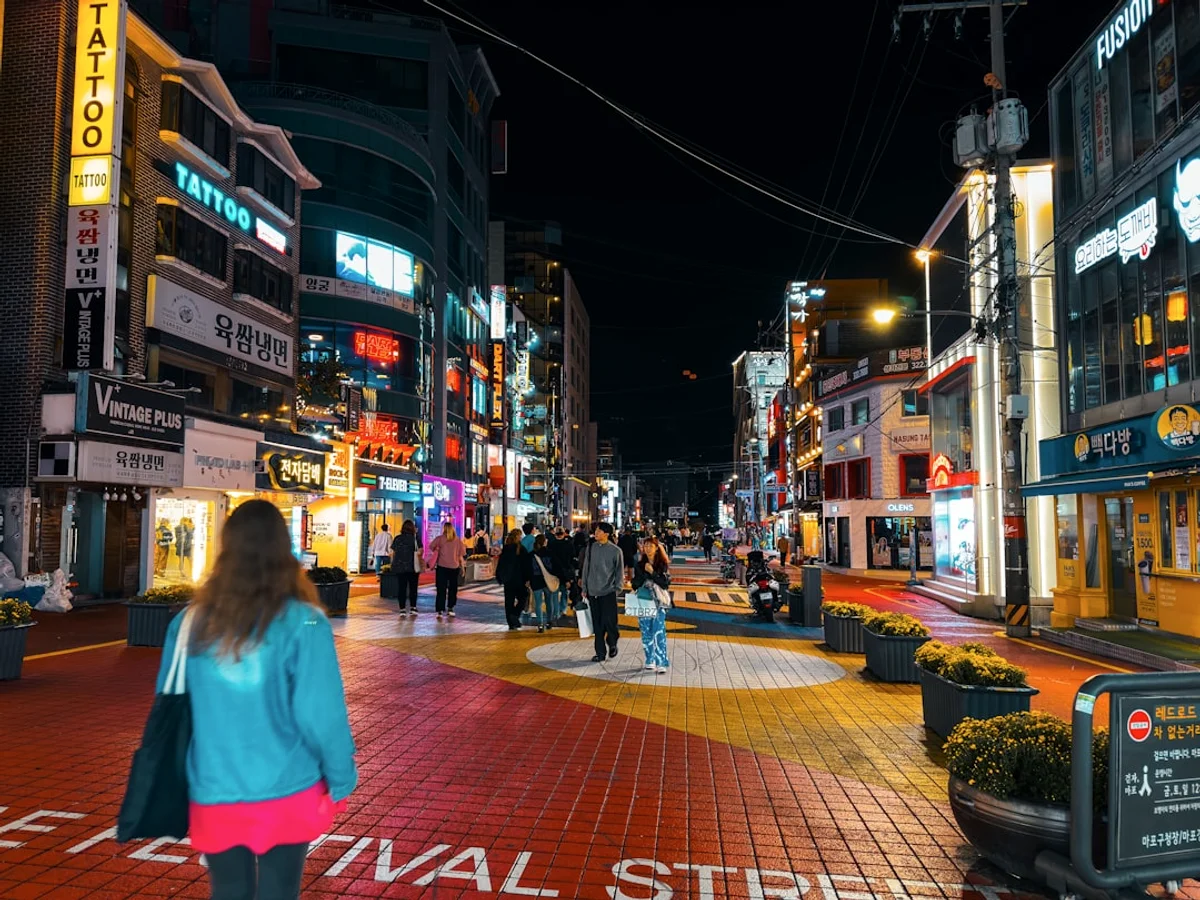
Introduction to Seoul Night Transportation Guide Owl Buses and Taxis
Seoul’s late-night transit is a mix of the legendary Owl Bus (N-bus) and a sea of taxis that get a bit pricey after midnight. Basically, you’re never truly stranded if you have a T-money card or a taxi app. You need to know which N-route matches your destination because the map looks like a neon spiderweb at 2 AM. The system is surprisingly reliable, though it requires a bit more patience than the daytime subway.
The System at a Glance
When I first moved here, I was terrified of being stuck in Gangnam after the subway stopped. But then I saw those buses with the glowing “N” followed by a number—the Owl Bus. These run from roughly 11:30 PM to 6:00 AM, bridging the gap when the trains are sleeping. It’s not just a random bus; it’s a carefully planned network that follows the busiest commuter paths. The best part? You can use the same transit card you used for the subway, making the transition seamless.
- Fare: Expect to pay about 2,150 KRW with a card, which is slightly more than the day bus but a steal compared to a taxi.
- Coverage: Most major hubs like Hongdae, Itaewon, and Dongdaemun are well-connected.
- Integration: You still get transfer discounts if you’re switching between different night bus lines within the time limit.
Why the “Owl” exists
The thing is, Seoul is a 24-hour city, and the government realized that taxis alone couldn’t handle the sheer volume of people leaving work or parties late at night. Honestly, I was surprised to see how packed these buses can get at 2:00 AM. You’ll see everyone from office workers who stayed for a third round of soju to students headed home from a late-night study session.
- N-Bus naming: The numbers usually indicate the districts they connect (e.g., N13 connects district 1 and district 3).
- Frequency: They usually run every 25 to 35 minutes, so checking an app is non-negotiable.
- Safety: Every bus is equipped with GPS and cameras, making it feel very secure even for solo travelers.
A guide to Seoul Night Transportation Guide Owl Buses and Taxis
To navigate this properly, you need the right tech and a bit of “street smarts” because Seoul doesn’t wait for anyone. The most important tool in your pocket is KakaoTaxi or Uber (UT), and for the buses, KakaoBus or Naver Maps will be your best friends. What surprised me was i still remember the first time I tried to flag a taxi in Itaewon during a rainstorm at 1 AM; it was a total disaster until I realized everyone else was using an app.
Getting on the Owl Bus
Actually using the bus is pretty straightforward once you find the right stop. Look for the bus stop signs that have the dark blue or black N-routes listed. When the bus pulls up, you tap your card on the reader just like you do during the day. Just a heads up—the vibe on these buses is very different. It’s quieter, more somber, and the smell of fried chicken or beer occasionally wafts from someone’s takeout bag.
- Check the Route: Use Naver Maps to see exactly where the N-Bus is in real-time.
- T-Money is King: Make sure your card has at least 3,000 KRW before the convenience stores get too crowded.
- Wait Early: Since they run less frequently, missing one means a 30-minute wait in the cold or heat.
Navigating the Taxi Maze
If the bus isn’t your thing, taxis are everywhere, but they come with rules. Since late 2022, the surcharge system in Seoul has become a bit complex. The late-night surcharge starts at 10:00 PM now, not midnight like it used to. I found out the hard way when a trip that here cost 12,000 KRW suddenly jumped to nearly 18,000 KRW just because I left the bar twenty minutes later than planned.
- Download KakaoT: It’s the gold standard; even if you don’t have a Korean credit card, you can choose “Pay to driver” at the end.
- Identify the Light: A red light that says 빈차 (Bin-cha) means the taxi is empty and ready for a passenger.
- Check the Surcharge: Between 11:00 PM and 2:00 AM, the surcharge can hit 40%, so keep that in mind for your budget.
The importance of Seoul Night Transportation Guide Owl Buses and Taxis
Without these services, Seoul would basically stop breathing the moment the clock strikes midnight. The “Owl Bus” isn’t just a convenience; it’s a social safety net for those who can’t afford a 30,000 KRW taxi ride across the city. Personally, I think the reliability of the N-Bus system is what makes Seoul one of the most livable cities for night owls, though sitting on a bus for an hour when you’re tired can be a test of willpower. This was actually better than I expected. It was surprisingly quiet despite the crowds.
Reliability vs. Cost
You know what’s great? Even at 3:30 AM, the N-bus stays on schedule within a few minutes. I’ve stood on a street corner in Sinsa watching the digital display count down the seconds, and it’s rarely wrong. Taxis are faster, sure, but during peak hours (like Friday night in Gangnam), finding an available one is like finding a needle in a haystack. The bus becomes the only logical choice unless you want to spend an hour waving your arm at cars that are already “Reserved.”
- Cost Savings: Taking the N37 instead of a taxi can save you enough money for a whole meal the next day.
- Traffic: At night, there’s no traffic, so the buses move surprisingly fast through the wide boulevards.
- Environmental Impact: One Owl Bus takes dozens of potential taxi trips off the road, which is a nice little bonus for the planet.
The Social Aspect
There’s something weirdly poetic about the Seoul night bus. You see the “real” city here. I remember sitting next to an old man who was clearly a night security guard and a young couple whispering to each other in the back. It’s a shared experience. Compared to a taxi where you’re just staring at the driver’s head, the bus feels like you’re part of the city’s midnight rhythm. Well, it’s poetic until someone starts snoring loudly, which happens more often than you’d think.
Comparison with alternatives
- Walking: Not recommended; Seoul is way bigger than it looks on a map.
- Scooters: they’re everywhere, but they often “lock” or have restricted zones late at night for safety.
- Private Hire: Uber (UT) is getting better, but KakaoTaxi still has the most drivers by a landslide.
Top locations for Seoul Night Transportation Guide Owl Buses and Taxis
If you find yourself in certain parts of the city, your transport strategy has to change based on the local “vibe.” For example, Hongdae is the king of night buses, while Itaewon is occasionally a taxi battleground because of its hilly terrain. Honestly, I’d avoid trying to catch a taxi right in front of the main Itaewon station exit; it’s better to walk five minutes toward Hangang-jin where things are a bit calmer. There’s this distinct scent that hits you.
The Nightlife Hubs
Hongdae (N26, N62) and Gangnam (N13, N31) are the heavy hitters. If you’re at Hongdae Station Exit 9, you’ll see a literal line for the N-Bus. It’s orderly, very Korean, and surprisingly quiet. I still remember the smell of the street toast stalls nearby while I waited for the N26—that sweet, buttery aroma is the unofficial scent of Seoul at 2 AM.
- Hongdae: Great N-Bus connections but the stops get very crowded after 1 AM.
- Gangnam: Taxis are plentiful but they occasionally “cherry-pick” long-distance fares (which is illegal but still happens).
- Dongdaemun: The night markets mean transport here runs heavy until dawn.
Airport Connections
This is a big one. If your flight lands at Incheon at 11:00 PM, you might miss the last AREX train. Don’t panic. There are Late Night Airport Buses that go to Seoul Station and Gangnam. I once landed at midnight and was terrified of a 70,000 KRW taxi bill, but the night bus got me to the city center for about 10,000 KRW. It was a life-saver, honestly.
- N6001: Goes to Seoul Station from Incheon Terminal 1.
- N6000: Goes to Gangnam Terminal.
- Price: here around 9,000 - 10,000 KRW, which is a bargain for that distance.
Seasonal considerations for Seoul Night Transportation Guide Owl Buses and Taxis
In the winter, waiting for an N-bus can be a test of survival, while in the summer, the air-conditioned bus is a literal sanctuary. I’ve spent many nights in January dancing in place at a bus stop just to keep my toes from freezing, wishing I’d just paid for the taxi. Seoul’s weather is extreme, and it directly affects how you handle the night.
Winter and Summer Struggles
When the temperature hits -10°C, the “Owl” becomes a lot less appealing if you have to wait 30 minutes. Many bus stops have heated benches (yes, really!), which are the greatest invention in human history. In the summer, the humidity is so thick you could cut it with a knife, and the sweat-to-AC transition when you step onto an N-bus is the best feeling in the world.
- Winter: Look for stops with transparent plastic wind shields or heated seats.
- Summer: Taxis are a luxury here because they offer private AC, but be prepared for high demand during sudden rainstorms.
- Monsoon Season: If it’s raining, forget about finding a taxi on the street. Use the app or get to a bus stop early.
Holiday Schedules
During Chuseok or Lunar New Year, the city changes. Surprisingly, the government occasionally extends subway and bus hours during these times to help people get home from family gatherings or the late-night movies. But keep in mind, many taxi drivers take these days off. I remember wandering around Jongno during Chuseok a few years back; the streets were eerily quiet, and the N-Bus was almost empty. It was a bit surreal.
- Check “Seoul Transport” notices: They post holiday extensions a week in advance.
- Pre-book Taxis: Some apps allow for scheduling, though it’s hit or miss on big holidays.
- Expect Delays: Even with fewer cars, the buses might run on a modified “holiday” frequency.
What to avoid with Seoul Night Transportation Guide Owl Buses and Taxis
The biggest one? You’ll find a few “rookie mistakes” that can turn a fun night into a long, expensive walk home. Trusting your gut instead of your phone. Seoul’s streets are a maze, and at 3 AM, your sense of direction is probably not at its best. I once got on an N-bus going the complete opposite direction because I didn’t check the “direction of travel” on the map—spent an hour seeing parts of Eunpyeong-gu I never planned to visit.
Payment and App Blunders
Don’t be the person at the front of the bus line with a zero-balance T-money card. Most night buses don’t take cash anymore, or if they do, they don’t give change easily. Also, when using KakaoTaxi, make sure your “starting point” pin is exactly where you are standing. Drivers in Seoul don’t like to hunt for you in side alleys.
- Avoid Cash: Always have your card topped up or a credit card with “T-money” functionality.
- Avoid “Call” Taxis: If a taxi has a blue light on top, it’s a designated “Call” taxi and won’t stop for a street hail.
- The “Reserved” Sign: If you see 예약 (Yeyak) in red, don’t bother waving. They already have a passenger via an app.
Location Mistakes
Certain spots are “taxi black holes.” Gangnam Station Exit 10 at 1:30 AM on a Friday is one of them. You can stand there for an hour and never get a car. Instead, walk a block or two away from the main strip or head toward a bus stop. The thing is, drivers sometimes avoid the busiest spots because they don’t want to deal with the chaos or short-distance fares.
- Don’t wait at the main exit: Walk 200-300 meters away from the crowd to catch a cab.
- Don’t ignore the N-Bus signs: Even if you want a taxi, knowing where the nearest N-Bus stop is provides a vital “Plan B.”
- Double-check the destination: Make sure you have your destination written in Hangeul (Korean script) on your phone to show the driver. Many older drivers don’t speak English and can’t read Romanized maps easily.