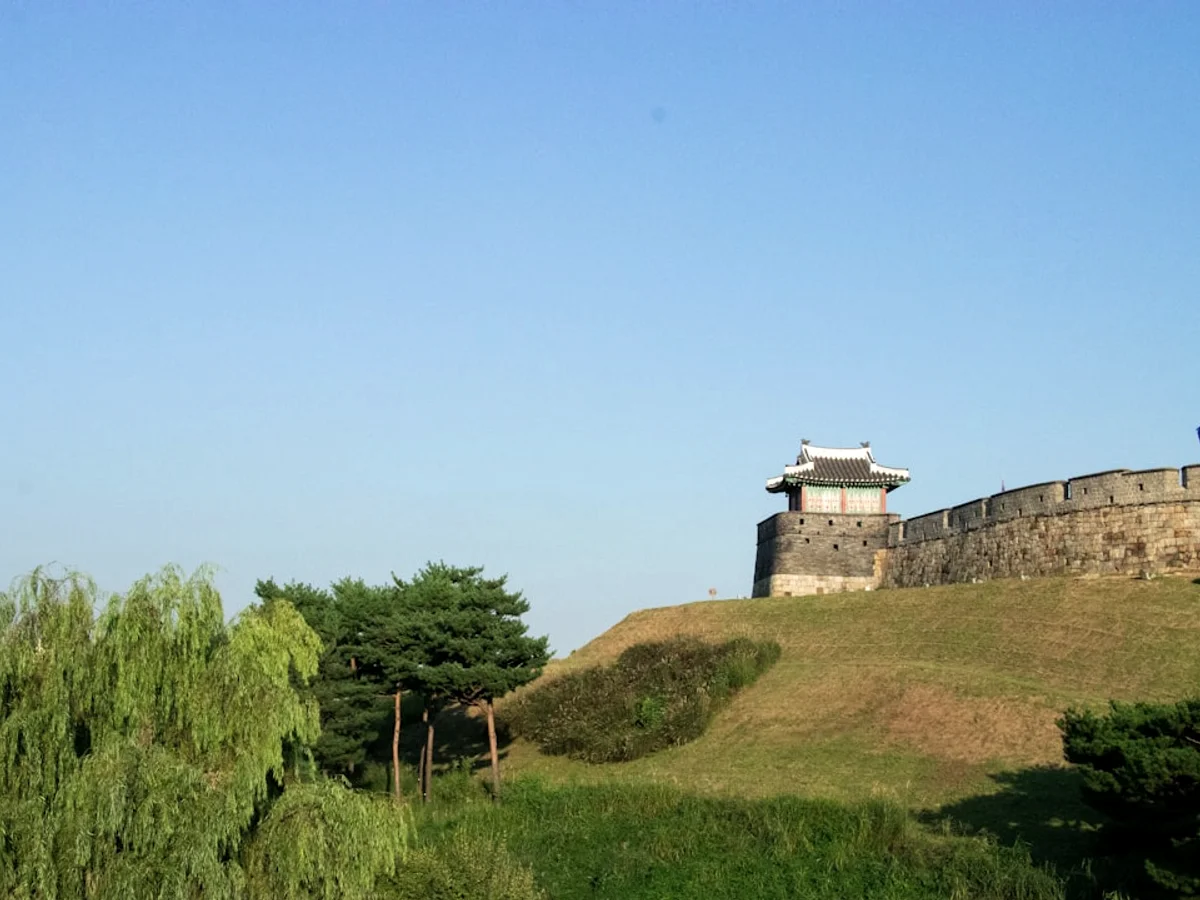
what’s Suwon Hwaseong Fortress Day Trip Guide: History, Walking, and Local Tips?
Suwon Hwaseong is essentially a massive, 5.7-kilometer stone ribbon that wraps around the heart of Suwon city. Honestly? it’s not just a dusty monument; it’s a living part of the city where 18th-century military architecture meets 21st-century cafe culture. For most of us living in Seoul, it’s the ultimate “escape the skyscrapers” day trip that only takes about an hour by train. The fragrant smell of street food was everywhere. It’s in the basement level. When I first visited, I honestly thought it would be like any other fortress—a few old walls and some steep stairs. But Suwon is different. Word of advice: it was built by King Jeongjo in the late 1700s, and the guy was a bit of a visionary. Colorful decorations caught my eye everywhere. Walking along the ramparts today, you aren’t looking at empty fields; you’re looking down into people’s backyards, trendy rooftops, and bustling markets. He didn’t just want a wall; he wanted a perfect city that blended military strength with commercial power. It’s weirdly intimate for a military fortification. From my perspective,
- It’s a UNESCO World Heritage site, recognized for its scientific and architectural precision.
- The fortress was built using the Geojunggi, a heavy-lifting crane invented specifically for this project.
- It’s located in Suwon, the capital of Gyeonggi-do, easily reachable via Seoul Subway Line 1.
- Unlike the palaces in Seoul, you can walk the entire perimeter of this city-sized wall.
The Historical Context
The history here is actually quite tragic, which is something a lot of visitors miss. King Jeongjo built this place to honor his father, Prince Sado, who was killed in a truly horrific way (trapped in a rice chest by his own father). The fortress was Jeongjo’s way of moving the power base away from the toxic politics of Seoul. I still remember reading the plaques at the Hwaseong Haenggung Palace and feeling a bit of a chill. The architecture isn’t just for show; it’s a physical manifestation of a son’s devotion and a king’s ambition.
A Modern Living Space
What makes it stand out in Korean life today is how it has been integrated into the “Newtro” trend. You’ll see kids in their 20s taking photos against these ancient stone blocks while holding 5,000 won iced americanos. It’s not a “look but don’t touch” kind of place. People exercise here, walk their dogs, and even hold massive festivals like the Suwon Hwaseong Cultural Festival every October. It’s the backbone of the city’s identity, honestly.
- Built between 1794 and 1796.
- Designed by the famous philosopher and scholar Jeong Yak-yong.
- Combines Eastern and Western architectural influences, which was super rare back then.
- Severely damaged during the Korean War but meticulously restored using the original Hwaseong Seongyeok Uigwe (construction records).
Why do Koreans love Suwon Hwaseong Fortress Day Trip Guide: History, Walking, and Local Tips?
Koreans love Suwon Hwaseong because it offers a perfect “healing” (힐링) atmosphere that balances historical pride with a very cool, modern aesthetic. It’s the kind of place where you can learn about the Joseon Dynasty in the morning and then spend four hours in a “Hip-ji-ro” style cafe in the afternoon. There’s a certain pride in the fact that this fortress was so advanced for its time. Mostly, it’s just a really beautiful place to hang out. I’d pick this over other options any day. It’s free to enter. I remember talking to a local friend who said Suwon is their favorite date spot because of the “Hengnidan-gil” vibe. That’s the neighborhood inside the walls. It’s full of these tiny, renovated houses that have been turned into pasta shops and vintage clothing stores. You know what surprised me? Even on a Tuesday afternoon, the place was buzzing with people. It’s not just for tourists; it’s where Koreans go to feel like they’ve traveled back in time without losing their high-speed internet.
The “Newtro” Appeal
The term “Newtro” (New + Retro) is huge in Korea right now, and Suwon is the poster child for it. The contrast between the old stone walls and the neon signs of the city is incredible for photography. Honestly, my phone’s storage was crying by the end of the day.
- Photography spots: The sunset from Seojangdae (the command post) is legendary on Instagram.
- K-Drama tourism: Huge hits like Twenty-Five Twenty-One and Our Beloved Summer were filmed here.
- Accessibility: It’s close enough for a spontaneous trip but feels far enough to be a “vacation.”
A Sense of Filial Piety
There’s also a deep cultural respect for the story of King Jeongjo. Filial piety—respect for one’s parents—is a massive pillar of Korean society. The fact that an entire city was built out of love for a deceased father resonates with people here. When I was walking through the palace, I saw a lot of families explaining this history to their kids. It’s like a giant, outdoor classroom that doesn’t feel boring.
- King Jeongjo is often considered one of Korea’s greatest kings.
- The fortress symbolizes a “dream city” that never quite reached its full potential because of the King’s early death.
- The design includes “secret gates” (Am-mun) that make you feel like an explorer.
- It’s one of the few places where military history feels “pretty.”
Top locations for Suwon Hwaseong Fortress Day Trip Guide: History, Walking, and Local Tips
This neighborhood is tucked right inside the fortress walls and has become one of the trendiest spots in the country. Not gonna lie, but you shouldn’t just stay in the cafes; the fortress itself has specific gates and pavilions that offer the best views. If you’re heading to Suwon, the “Must-See” list is actually quite long, but Haenggung-dong is the absolute center of the action. My personal favorite spot—and I tell everyone this—is Bangasuryujeong — it’s a pavilion overlooking a small pond called yongyeon. One local explained that when I first saw it at dusk, the way the light reflected off the water and the stone walls… There were groups of students sitting on picnic blankets with little portable lights, just chatting and enjoying the breeze. It felt so peaceful compared to the madness of Gangnam or Myeongdong. man, it was incredible.
- Hwaseong Haenggung: The temporary palace where the King stayed. It’s much smaller than Gyeongbokgung but very intimate.
- Paldalmun Gate: The massive southern gate. It’s actually in the middle of a giant roundabout, surrounded by markets.
- Yeonmudae: This is the military training ground where you can actually try your hand at traditional Korean archery for about 2,000 won.
- Flying Suwon: A giant tethered helium balloon that takes you 150 meters into the air for a bird’s-eye view.
The Secret Spots
You know, everyone goes to the main gates, but the “Am-mun” (secret gates) are where the real magic is. There’s one near the northeastern part of the wall that’s covered in ivy. It feels like something out of a fantasy novel. I spent about twenty minutes just sitting there, listening to the birds. The thing is, Suwon is big enough that you can actually find quiet corners if you’re willing to walk a bit away from the main tourist hubs.
The Foodie’s Paradise: Chicken Street
You can’t—and I mean cannot—leave Suwon without visiting the Suwon Tongdak Street. It’s located just outside the Paldalmun area. There are dozens of shops selling “old-fashioned” whole fried chicken. I went to Jinmi Tongdak, and the queue was out the door even at 3 PM. They give you these massive platters of chicken and fried gizzards. It’s greasy, it’s loud, and it’s absolutely delicious.
- Start at Janganmun Gate (the north gate) and walk towards the east.
- Stop by Hwahongmun, the gate with seven arched stone openings over the river.
- Make sure to visit Seojangdae on top of Paldalsan mountain—it’s a bit of a hike, but the view is the best in the city.
- End your walk at Haenggung-dong for a craft beer or a tea.
Seasonal considerations for Suwon Hwaseong Fortress Day Trip Guide: History, Walking, and Local Tips
Timing is everything with Suwon. Since the main attraction is an outdoor walking path, the weather will either be your best friend or your worst enemy. From personal experience, spring and autumn are the obvious winners, but each season has a very distinct “vibe.” Personally, I’m a sucker for the autumn colors, but there’s something to be said about a crisp winter walk when the crowds are gone. Entry was around $15. I remember going in late July once, thinking I could handle the heat. Big mistake. I gotta say, the humidity in Korea is no joke, and there is almost zero shade when you’re walking on top of the fortress walls. By the time I reached the Paldalsan section, I was drenched. First time I went, i ended up hiding in a convenience store for thirty minutes just to breathe. If you go in summer, you have to go at night. The fortress is lit up with these beautiful golden LEDs, and the temperature drops just enough to make it pleasant.
Spring and Autumn Peaks
Autumn is when the “Suwon Hwaseong Cultural Festival” happens. It’s usually in October. You get these massive parades with people dressed in traditional Joseon military gear. The trees along the wall turn vibrant shades of orange and red. It’s stunning, but be warned: it gets crowded. Like, “shoulder-to-shoulder” crowded.
- Spring (April-May): Cherry blossoms near the Hwahongmun gate are a must-see.
- Summer (July-August): Very hot. Stick to the “Media Art Show” that usually runs in the evenings.
- Autumn (September-November): Perfect hiking weather and the best festival season.
- Winter (December-February): It gets windy on the walls. Wear a heavy coat, but enjoy the empty paths.
Daily Timing
If you want the best photos without a million people in the background, get there by 9 AM. Most of the trendy cafes in Haenggung-dong don’t open until 11 AM or 12 PM, so you can do your heavy walking early and then reward yourself with food. I noticed that around 4 PM, the “Golden Hour” light hits the stone walls perfectly. That’s when you see all the professional photographers coming out with their tripods.
- Check the sunset time—you want to be at Seojangdae 20 minutes before it happens.
- The “Flying Suwon” balloon often closes if the wind is too strong, so check their website or Instagram before heading over.
- Avoid weekends if you can; the wait times for popular restaurants in Haenggung-dong can be over an hour.
A guide to Suwon Hwaseong Fortress Day Trip Guide: History, Walking, and Local Tips
How do you actually “do” Suwon? The funny thing is, well, most people start at Suwon Station, but that’s actually a bit of a walk from the fortress itself. Word of advice: once you’re there, the best way to experience it is to just pick a direction on the wall and start walking. You don’t need a map as long as you keep the wall on one side of you! You’ll want to take a bus or a short 5,000 won taxi ride to Janganmun or Paldalmun. This was actually better than I expected. Between us, you get 10 arrows, and a guide explains how to hold the bow in a very dramatic, Joseon-warrior style. Honestly, the most fun I had was trying the traditional archery at Yeonmudae. I missed the target completely with my first five shots. When I finally hit the edge of the board, the sound of the arrow hitting the wood—thwack—was so satisfying. It only costs about 2,000 won, which is a steal for a 15-minute experience. You could hear the chatter of locals nearby.
Walking the Perimeter
The full loop is about 5.7 kilometers. For a fit person, it takes maybe 2 to 3 hours. But that’s if you don’t stop. And you will stop. You’ll stop for photos, for snacks, and to look at the weirdly shaped watchtowers. 근데 (But), you don’t have to do the whole thing. Most people just walk the section from Janganmun to Hwahongmun, which is the most scenic part.
- Tickets: While the wall itself is technically free to walk in most parts, the Hwaseong Haenggung Palace requires a small entry fee of around 1,500 won.
- Transportation: From Seoul, take the KTX (fast but more expensive) or the Mugunghwa-ho train from Seoul Station. It’s only 2,600 won and takes about 30 minutes.
- The Hwaseong Trolley: There’s a cute little tourist train that looks like a dragon. It’s great if you have kids or if your legs are tired.
Local Customs to Notice
You’ll see a lot of people wearing Hanbok (traditional Korean clothing). There are rental shops all over Haenggung-dong. Unlike the palaces in Seoul where everyone is doing it, in Suwon, it feels a bit more relaxed. You’ll also notice people “picnicking” on the grass near the wall. Technically, you should stay on the paths, but there are designated areas near Bangasuryujeong where it’s totally fine to lay out a mat.
- Arrive at Suwon Station (Line 1 or Korail).
- Take Bus 60, 660, or 7 to Janganmun Gate.
- Walk the wall towards the east for the best views of the river.
- Have a “Galbi” (marinated ribs) lunch—Suwon is famous for this!
- Spend the afternoon “cafe hopping” in Haenggung-dong.
What to avoid with Suwon Hwaseong Fortress Day Trip Guide: History, Walking, and Local Tips
The biggest mistake people make is trying to treat Suwon like a quick two-hour stop. It’s not, and if you rush it, you’ll just end up tired and sweaty. Another thing—don’t underestimate the hills. The section leading up to Seojangdae is essentially a giant staircase. I saw a group of tourists in high heels and fancy loafers struggling halfway up, and honestly, I felt bad for them. Wear sneakers. Your feet will thank you. Also, be careful with the “Suwon Galbi” trap. While Suwon is famous for its ribs, some of the restaurants right next to the tourist gates are overpriced and not that great. I once paid almost 50,000 won for a portion that was mostly bone. Talk about a disappointment. It’s better to walk a few blocks into the residential areas or the market to find where the locals actually eat.
Cultural Missteps
Don’t be that person who climbs on the actual structures. Most of the fortress is sturdy stone, but some of the wooden pavilions are original or very fragile. There are signs everywhere saying “No Climbing,” but you still see people trying to get that “perfect” angle. It’s disrespectful and honestly, the security guards are surprisingly fast.
- Avoid Midday in Summer: you’ll literally bake on the stone walls.
- Don’t skip the Haenggung-dong alleys: The main road is boring; the magic is in the side streets.
- Watch out for the “Trolley” schedule: It sells out fast on weekends, so don’t count on it as your only way around.
Logistics Mistakes
One thing that caught me off guard was the train situation. There are two types of Line 1 trains from Seoul: the “Local” and the “Express.” If you accidentally get on the local one from Yongsan, it can take nearly 80 minutes and stop at about 25 stations. It’s soul-crushing. Always look for the Express (Gup-haeng) train or just pay the extra couple of dollars for the Mugunghwa train.
- Don’t wear uncomfortable shoes—you will walk at least 10,000 steps.
- Don’t forget to bring water; there aren’t many shops once you’re up on the fortress wall.
- Don’t miss the “Chicken Street”—even if you aren’t a big fried chicken fan, the atmosphere alone is worth it.
Tips for Suwon Hwaseong Fortress Day Trip Guide: History, Walking, and Local Tips
If you’re on a budget, Suwon is a dream. You can have a full day of culture, history, and food for under 40,000 won if you play your cards right. One of my favorite “pro tips” is to use the Suwon City Tour app. It’s not perfect, but it gives you some cool historical context as you walk. Also, if you’re planning on visiting the palace and the museum, buy the “Integrated Ticket.” It saves you a few bucks and makes the whole process smoother. The “Flying Suwon” balloon is another thing people ask about. Is it worth the 20,000 won? If the weather is clear, yes. But here’s the secret: go right at sunset. You get to see the city lights flicker on and the fortress wall glowing like a golden ring. I still remember the feeling of the wind hitting my face as we rose up. It was a bit terrifying—I’m not great with heights—but the view of the entire Gyeonggi province was worth the shaky knees. From my perspective,
Eating Like a Local
While everyone talks about Galbi, you should also try the Hwang-nam-ppang (red bean bread) or the local street food in the Paldalmun Market. I found this tiny stall selling hotteok (sweet pancakes) for 1,500 won that was better than anything I’ve had in Seoul. The market is huge and a bit chaotic, but it’s the best place to see the “real” Suwon.
- T-Money Card: Make sure it’s topped up. You’ll be hopping on and off buses.
- Timing for the Balloon: It stops operating if wind speeds exceed a certain level. Check their Instagram (@flyingsuwon) for real-time updates.
- Luggage: There are lockers at Suwon Station. Don’t try to carry your bags up the fortress hills.
Planning Your Route
Most people enter through Janganmun because it’s the biggest gate. But if you want a more dramatic start, enter through Hwahongmun (the water gate). The sound of the water rushing through the seven stone arches is the best way to start your trip. From there, it’s a short, scenic walk to the pond at Bangasuryujeong.
- Download Naver Maps or Kakao Maps—Google Maps is pretty useless in Korea.
- If you want to eat at a famous chicken place like Jinmi, go before 5 PM on weekends.
- Bring a power bank. Between the navigation and the thousands of photos, your battery will die.
- If you have time, check out the Suwon Hwaseong Museum—it explains how they actually built the wall using 18th-century “robots.”