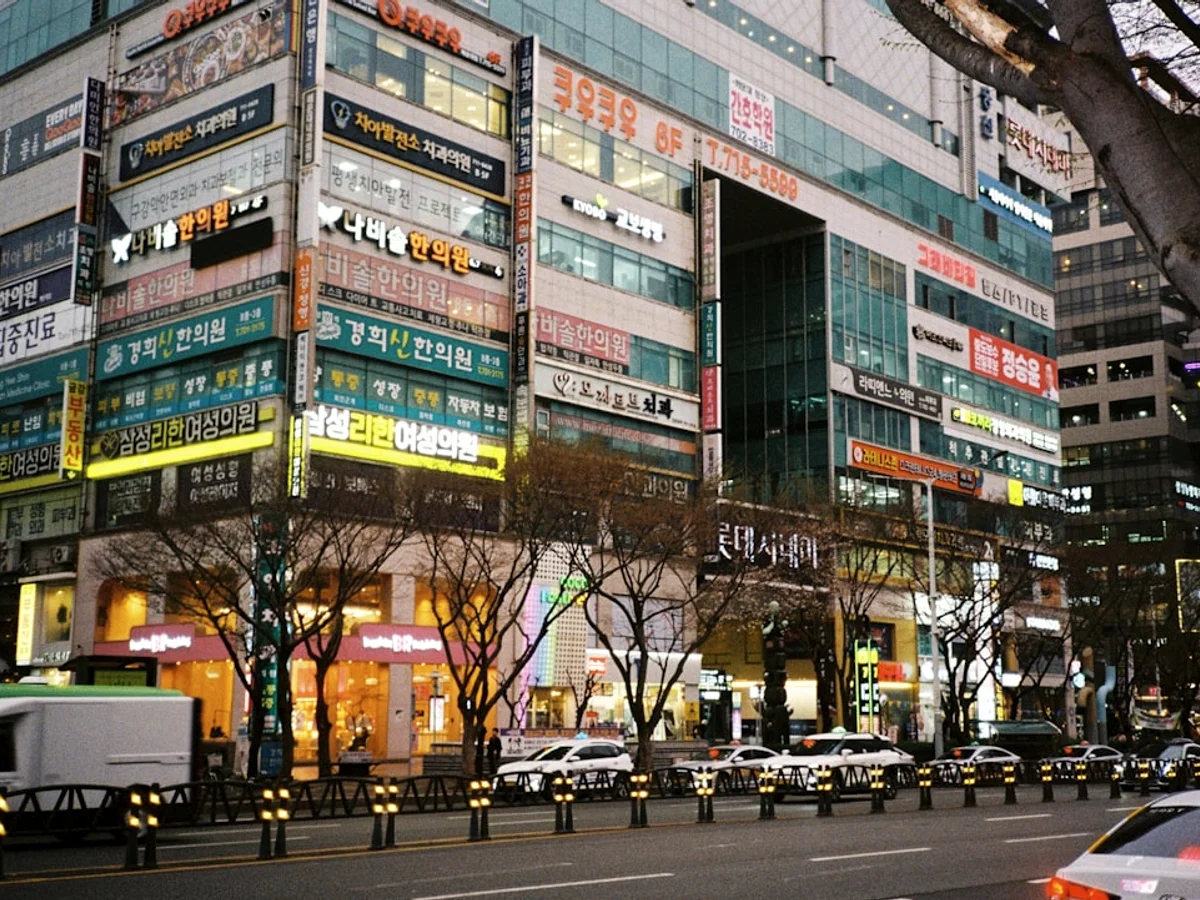
what’s Trendy Street Fashion Shopping: Hongdae and Ewha University Districts?
Hongdae and Ewha Womans University (often called “Edae”) act as the twin engines of Seoul’s youth fashion scene, offering distinct but complementary shopping experiences where trends move at lightning speed. While Edae is famous for its “Fashion Street” filled with feminine, ultra-affordable basics often priced around 10,000 won, Hongdae offers a grittier mix of indie boutiques, vintage basements, and edgy streetwear that caters to a more diverse, artistic crowd. I wasn’t completely sold on this.
The Ewha Bargain Hunt
Honestly, the first time I stepped out of Ewha Womans University Station (Line 2, Exit 2 or 3), I was completely overwhelmed. You’re immediately hit by this maze of narrow alleys packed with clothing racks spilling out onto the street. It’s chaotic, loud, and incredibly fun. The air usually smells like a mix of sweet waffles from street vendors and cheap fabric, which is weirdly nostalgic for me now. The vibe here’s strictly feminine and trendy—think pastel cardigans, flowy skirts, and endless accessories. You know what surprised me? You can literally outfit yourself from head to toe for under 50,000 won (about $40). But you have to be careful with sizing; “Free Size” in these shops typically means a Korean small or medium, and they rarely have fitting rooms. Here’s what you’ll see everywhere in the Edae alleys:
- The “Man-won” (10,000 KRW) Racks: Rows of dresses, blouses, or pants selling for a flat rate.
- Socks Galore: usually 1,000 won per pair, with designs ranging from cute characters to famous art prints.
- Accessory Walls: Tiny shops floor-to-ceiling with earrings and rings, starting at just 5,000 won.
Hongdae’s Creative Chaos
If Edae is about bargains, Hongdae is about attitude. When you head over to the Hongik University area (Line 2, Exit 9), the energy shifts. It feels younger, louder, and a bit more rebellious. I remember wandering down “Parking Lot Street” around 9 PM on a Friday—the bass from nearby clubs was thumping through the ground, and I found this incredible vintage basement shop just by following a neon sign. Honestly, I’d pick Hongdae over Myeongdong any day because the styles feel less mass-produced. The boutiques here curate their collections more carefully, mixing imported Japanese street styles with domestic indie brands. You’ll pay a bit more—maybe 20,000 to 40,000 won for a top—but the designs are here edgier.
- Style Nanda Flagship: Even if you don’t buy anything, the interior design is a photo op in itself.
- Åland: A massive multi-brand store that’s great for seeing what local designers are up to.
- Vintage Shops: Look for signs saying “Vintage” (빈티지) in the basements near the playground; I once found a perfect leather jacket there for 45,000 won.
Why Speed Matters Here
The thing is, Korean fashion moves at a terrifying pace. It’s the “ppalli-ppalli” (hurry, hurry) culture applied to clothes. I’ve seen a trend explode on Instagram one week and fill every shop window in Hongdae the next, only to vanish a month later. It’s ephemeral. When I bought a chunky knit vest in Edae last autumn, I knew it probably wouldn’t last three wash cycles, but that wasn’t the point. It was about participating in the “now.” This shopping culture allows students to reinvent themselves constantly without breaking the bank. Just don’t expect heirloom quality—you’re paying for the look, the vibe, and the immediate satisfaction of fitting in with the Seoul street style right this second. The only downside? It can feel a bit wasteful if you aren’t careful with what you pick.
Top locations for Trendy Street Fashion Shopping: Hongdae and Ewha University Districts
For a quick fix of the latest trends without emptying your wallet, head straight to Hongdae’s Parking Lot Street for edgy, unisex styles or Ewha Womans University Fashion Street for more feminine, budget-friendly basics. Real talk: both areas are packed with small boutiques, but the vibe is totally different—Hongdae is loud and chaotic, while Ewha feels a bit more compact and curated for students.
Getting Lost in Hongdae’s Maze
You know, everyone tells you to go to the main shopping street in Hongdae, right? Honestly, I found it a bit overwhelming the first time I went. The music thumping from every storefront, the crowds bumping into you—it’s a lot. But the real treasure? It’s in the messy web of side alleys. If you wander away from Hongik University Station Exit 9 and head towards the Sangsu area, the shops get quirkier and surprisingly, a bit cheaper. I once stumbled upon a basement vintage shop there—smelled faintly of old leather and dust—and found a perfect denim jacket for just 15,000 KRW.
- Look for “Free Size”: Most street shops sell “one size fits all,” which here means a Korean small/medium.
- Cash is King: While many places take cards now, offering cash can sometimes get you a small discount, like 1,000 KRW off.
- Try it on? Maybe not: Many street stalls don’t have fitting rooms, especially for tops. You just gotta eyeball it.
The Ewha Aesthetic
Ewha is a different beast entirely. It feels… younger? Maybe fresher. The main drag leading up to the university (Ewha Womans University Station Exit 2) used to be the mecca of women’s fashion, and while it’s quieter now than it was a few years ago, the bargains are still insane. I remember walking up that steep hill—seriously, wear comfortable shoes—and seeing rack after rack of “10,000 KRW” signs. The style here leans heavily towards pastel cardigans, flowy skirts, and cute accessories. It’s where I stock up on socks; you can get bundles of cute character socks for practically nothing. Here’s why I’d pick Ewha for a quick shopping run:
- Price Visibility: Prices are plastered on big signs, so you don’t have to ask “how much?” every five seconds.
- Accessory Heaven: The alleyways are filled with tiny shops selling earrings and rings for as low as 5,000 KRW.
- Less chaotic: Compared to Hongdae on a Friday night, Ewha feels like a walk in the park. Honestly it was surprisingly empty when I visited. Fun fact: hongdae feels very “street” and oversized, mirroring the indie music scene nearby, whereas Ewha captures that polished, “campus goddess” look. When I’m feeling lazy, I just grab a coffee, sit on a bench, and people-watch for a bit to see what the actual students are wearing before I buy anything. One thing to keep in mind—regional variations in style are real here. It’s the best way to spot a trend before it hits the shelves.
Why is Trendy Street Fashion Shopping: Hongdae and Ewha University Districts significant?
The best time to hit these university districts is undoubtedly late afternoon to evening, roughly from 3:00 PM to 9:00 PM. Locals mentioned that this aligns perfectly with the student lifestyle—shops occasionally open late, and the atmosphere really comes alive once classes finish for the day. It’s in the basement level.
The “Student Schedule” Effect
When I first visited Ewha Womans University shopping street, I made the rookie mistake of arriving at 10:00 AM, eager to beat the crowds. Honestly, it was a ghost town. I wandered down the steep alleys, and almost every shutter was down. You have to remember that these areas cater specifically to university students who aren’t looking to shop for cardigans before their morning lectures. Most boutique owners don’t even bother unlocking their doors until 11:00 AM or noon, and many of the trendier, smaller spots wait until 1:00 PM.
- Weekdays (Mon-Thu): Best for serious shoppers who want to try things on without waiting.
- Fridays: The energy starts building around 4:00 PM; great for people watching but getting crowded.
- Weekends: Absolute chaos—in a fun way, mostly—with street performances and shoulder-to-shoulder crowds.
Navigating the Hongdae Weekend Chaos
Speaking of weekends, Hongdae on a Saturday night is an assault on the senses—loud music thumping from clothing stores, the smell of hotteok (sweet pancakes) wafting from food stalls, and the sheer volume of people. You know, I actually prefer visiting Hongdae on a Tuesday evening. You get the same fashion inventory but can actually move through the racks. If you do go on a weekend, try to visit the shops near Sangsu Station instead of the main drag; it’s slightly calmer. One local explained that unlike department stores that close at 8:00 PM, street boutiques in Hongdae occasionally keep the lights on until 11:00 PM. One thing that surprised me was how late these places stay open. I remember frantically buying a padded coat at 10:30 PM during a sudden cold snap, and the shop owner didn’t even blink. If you ask me,
Seasonal Realities
Spring and autumn are obviously ideal, but summer and winter have their own quirks. Korean street shopping involves a lot of outdoor racks and semi-open storefronts. Trying on a chunky sweater in a tiny, curtained-off corner when it’s -10°C (14°F) outside? Not my favorite experience. My hands were so cold I couldn’t button the coat I was trying on.
- Summer (July-August): Go at night, after 7:00 PM, when the sun goes down and the heat breaks slightly.
- Winter (Dec-Feb): Stick to the underground shopping centers or larger boutiques with proper heating doors.
- Sales Seasons: Look for “Season Off” signs in late February and late August for massive discounts on clearing inventory.
A guide to Trendy Street Fashion Shopping: Hongdae and Ewha University Districts
To experience these districts like a local, start your shopping trip at Ewha Womans University in the late afternoon for accessories and basics, then head to Hongdae after 7 PM when the street energy peaks. Always carry 50,000 won in cash for bargaining power at smaller stalls, and remember that “Free Size” here means a Korean small or medium—so check the shoulder width before you buy. This was actually better than I expected.
Ewha’s Alleyways & The “Free Size” Reality
Ewha—or Edae, as the locals call it—feels a bit different these days. It used to be the fashion mecca, but now it’s calmer, which honestly I prefer for browsing without getting elbowed. You’ll see racks of clothes right on the street, sometimes marked with big red signs saying 10,000 won (about $7.50). The thing is, you have to be careful with sizing. I still remember picking up a cute knit sweater near the main university gate; it was labeled “Free Size,” but when I held it up, it looked like it would barely fit a middle schooler.
- Shoulder Check: Always hold the garment up to your shoulders to gauge the fit since try-ons for tops are rarely allowed.
- Fabric Feel: Fast fashion here moves at lightning speed, so touch the material. If it feels scratchy now, it’ll be a nightmare later.
- Sock Heaven: Ewha is arguably the best place for cheap, cute socks—here 1,000 won per pair or 10 pairs for 10,000 won.
Hongdae After Dark: Chaos and Cash
If Ewha is the appetizer, Hongdae is the main course—and man, it is loud. Around 9 PM on a Friday, the bass from street buskers near Exit 9 vibrates right through your chest while you’re trying to look at coats. It’s chaotic, but that’s the fun of it. Most boutiques here stay open late, until 11 PM or midnight, catering to the university crowd. When I first visited, I was surprised to find a basement vintage shop open past midnight, smelling faintly of incense and old denim. Cash can sometimes be king. One unspoken rule? While most places take cards now, smaller stalls or underground shopping centers might knock 1,000 to 2,000 won off the price if you pay with crisp bills.
- Look for “Hyeongeum” (Cash) Signs: Some price tags list two prices—the lower one is for cash.
- No Refunds: Street fashion is almost always final sale. Check zippers and buttons before you leave the counter.
- The Makeup Mask: If a shop does let you try on clothes, they’ll hand you a weird tissue-paper face mask. Use it. It prevents your foundation from smearing on the merchandise, and the staff will scold you if you don’t.
Navigating the “No Try-On” Culture
This part trips up a lot of visitors. You generally can’t try on white clothes, light-colored tops, or leggings. It makes sense—hygiene and makeup stains—but it’s risky for the buyer. Honestly, I’ve bought a few “un-try-on-able” white shirts that ended up being see-through, which was a total waste of 15,000 won. If you’re unsure, look for shops that have sample pieces hanging separately; those are the designated try-on items. When you do find something you love, don’t overthink it. The turnover is so fast that if you come back in two hours, that jacket might literally be gone.
When to experience Trendy Street Fashion Shopping: Hongdae and Ewha University Districts
Koreans flock to Hongdae and Ewha because these areas represent the absolute bleeding edge of “Fast Fashion” at prices that allow for constant reinvention. Locals mentioned that it’s not just about buying clothes; it’s a social ritual of keeping up with trends that shift almost weekly, driven by the intense desire for self-expression and the pressure to look polished in a highly visual society. Look for the big sign near the corner.
The “Balli-Balli” Fashion Cycle
Honestly, when I first stepped out of Ewha Womans University Station Exit 2, I was totally overwhelmed. The sheer density of shops crammed into those narrow, winding alleys is insane. You have to understand that in Korea, trends move at the speed of light—a culture occasionally described as balli-balli (hurry, hurry). These university districts are the engine of that speed. If a K-drama lead wears a specific oversized cardigan on Tuesday, I guarantee you’ll see knock-offs lining the streets of Hongdae by Friday. It’s fascinating, really. How the shopping experience is basically a social sport, and you rarely see people browsing alone. You know what really surprised me? It’s groups of friends, arms linked, critiquing each other’s finds while balancing iced Americanos. I’d definitely recommend checking this out. The view from there was actually stunning.
- Affordability drives experimentation: With t-shirts costing just 10,000 KRW, students can try risky styles without financial guilt.
- Visual conformity: There is a strong cultural desire to fit in; when a trend hits, everyone wants to participate immediately.
- Instant gratification: Most shops here don’t even have fitting rooms for tops—you just hold it up, buy it, and go.
More Than Just Fabric
Historically, Ewha’s fashion street (Edae) evolved to serve thousands of female university students who needed to look sharp on a budget. That DNA is still there. But Hongdae adds this layer of artistic grit. I remember wandering near the Hongik University playground around 11 PM—the air smelled like grilled skewers and cheap perfume—and seeing students selling their own handmade accessories on blankets. That creative, indie spirit makes the shopping feel “authentic” even if the clothes are mass-produced. You aren’t buying heirlooms here. I bought a trendy beige trench coat in Hongdae for 29,000 won that looked amazing in photos, but the buttons started wobbling after two weeks. Let’s be real for a second, though. But that’s exactly the point, and the cultural mindset here values current style over longevity street fashion. It’s about the thrill of the hunt—finding that perfect piece that makes you feel like the main character, even if just for this season. Entry was around $15.
Common mistakes with Trendy Street Fashion Shopping: Hongdae and Ewha University Districts
If you’re looking for the absolute sweet spot between wallet-friendly prices and “I saw this on Instagram yesterday” styles, Hongdae and Ewha are basically unmatched. Between us, ewha offers a dense, easy-to-navigate alley of bargains perfect for a quick haul, while Hongdae is a sprawling, energetic adventure where vintage finds mix with indie trends. Just make sure you bring cash and comfortable shoes, because you’re going to be walking a lot. The place was packed with tourists and locals alike.
The 10,000 Won Wonderland
When I first visited the shopping street in front of Ewha Womans University, I honestly thought the price tags were a mistake. You see racks upon racks of trendy tops, skirts, and accessories for just 10,000 KRW (about $7-8 USD). It’s insane, really. But here’s the thing—you sometimes get what you pay for. I bought this super cute beige knit sweater there a couple of winters ago, and while it looked amazing for the first few weeks, it started pilling pretty fast after a wash. You have to be picky. Feel the fabric. Check the seams.
- Cash is king: You can occasionally haggle a bit or get a discount (here around 1,000–3,000 won) if you pay with hard cash instead of a card.
- “Free Size” reality: Most clothes are labeled “Free Size,” which—let’s be real— fits like a US size small or medium.
- No returns: Seriously, once you buy it, it’s yours. Most of these small shops have a strict “no refunds” policy.
Getting Lost in Hongdae’s Alleys
Hongdae is just… louder. Messier. Infinitely cooler. The main street is chaotic—loud K-pop blasting from every storefront, street performers dancing near the station, the smell of egg bread wafting through the cold air—but the real gems are hidden in the side alleys. I stumbled upon this basement vintage shop near the Sangsu Station side of Hongdae just because I liked the neon sign, and it ended up having the best denim jackets I’ve ever seen. The vibe was totally different from the main street; quiet, smelling faintly of incense and old leather.
- Start at Hongik Univ. Station Exit 9, but try to walk away from the main road quickly to find the unique stuff.
- Don’t skip the “playground” area on weekends; the handmade flea markets there are gold for unique accessories.
- Night shopping is a whole mood here; shops stay open super late, occasionally until 10 PM or 11 PM, so no rush.
The Fitting Room Struggle
Here, the part that always stresses me out a little. Most of these budget boutiques either don’t have fitting rooms, or they have strict rules. You can’t try on white clothes or tops (to avoid makeup stains), which makes buying t-shirts a bit of a gamble. I remember holding a skirt up to my waist in the middle of a crowded aisle in Ewha, trying to guess if it would fit, while three other girls were doing the exact same thing right next to me. It’s awkward, but hey, that’s part of the experience, right? If you’re unsure about the fit, bring a measuring tape or know your measurements in centimeters—it saves so much hassle.
Practical advice for Trendy Street Fashion Shopping: Hongdae and Ewha University Districts
Quick answer: The biggest shock for most visitors is the strict “no try-on” policy for tops and white items in budget boutiques. What nobody tells you is also, “Free Size” definitely doesn’t mean “fits everyone”—it corresponds to a small or medium (US size 2-6) at best.
The “Free Size” Illusion
I saw this cute knit vest labeled “Free Size” and assumed, you know, it was actually free-fitting. I learned this the hard way at a small boutique near Ewha Womans University. Honestly, I was surprised when I held it up—it looked tiny. In Korea, “Free Size” (or One Size) essentially means “one specific size that fits the average local demographic.” If you are taller than 165cm or have a bust larger than a B-cup, you need to be careful. Best to visit in the morning, around 10 AM. Thing is, you can’t try these tops on to check the fit. Most budget shops protecting their 10,000 won inventory won’t let you try on:
- White or light-colored clothing (to prevent makeup stains)
- T-shirts and tight tops
- Leggings or swimwear
That Awkward Face Mask Moment
When I first visited a shop in Hongdae that actually did allow trying on a dress, the staff handed me a white tissue box. I just stared at it. Between us, seriously, I had no idea what to do until the unni (older sister/staff) gestured to my face. You strictly have to wear a face cover—a light, paper-like mask—over your head before pulling clothes on. It keeps your foundation and lipstick off the merchandise. It feels ridiculous—I felt like a ghost haunting the changing room—but it’s non-negotiable. Also, don’t even think about wearing shoes inside the fitting stall. I once stepped in with one sneaker still on and the owner looked ready to kick me out.
The “No Refund” Reality
Here’s a mistake that cost me 45,000 won on my second trip. I bought a skirt, realized back at my Airbnb that the zipper was sticky, and tried to return it the next day. The owner pointed to a tiny sign I had completely ignored: “Exchange Only (7 days).” Most underground shopping malls and university boutiques strictly do no cash refunds. One local explained that period. If you find a defect, they might exchange it for the same item. Getting your money back is rare unless you’re at a big department store. There’s this distinct scent that hits you.
- Check zippers and seams thoroughly before paying.
- Ask “Hwan-bul ga-neung-hae-yo?” (Is a refund possible?) if you’re unsure, though the answer is here no.
- Bring cash! While cards are accepted, paying cash can sometimes knock 1,000 to 3,000 won off the price if you ask nicely.