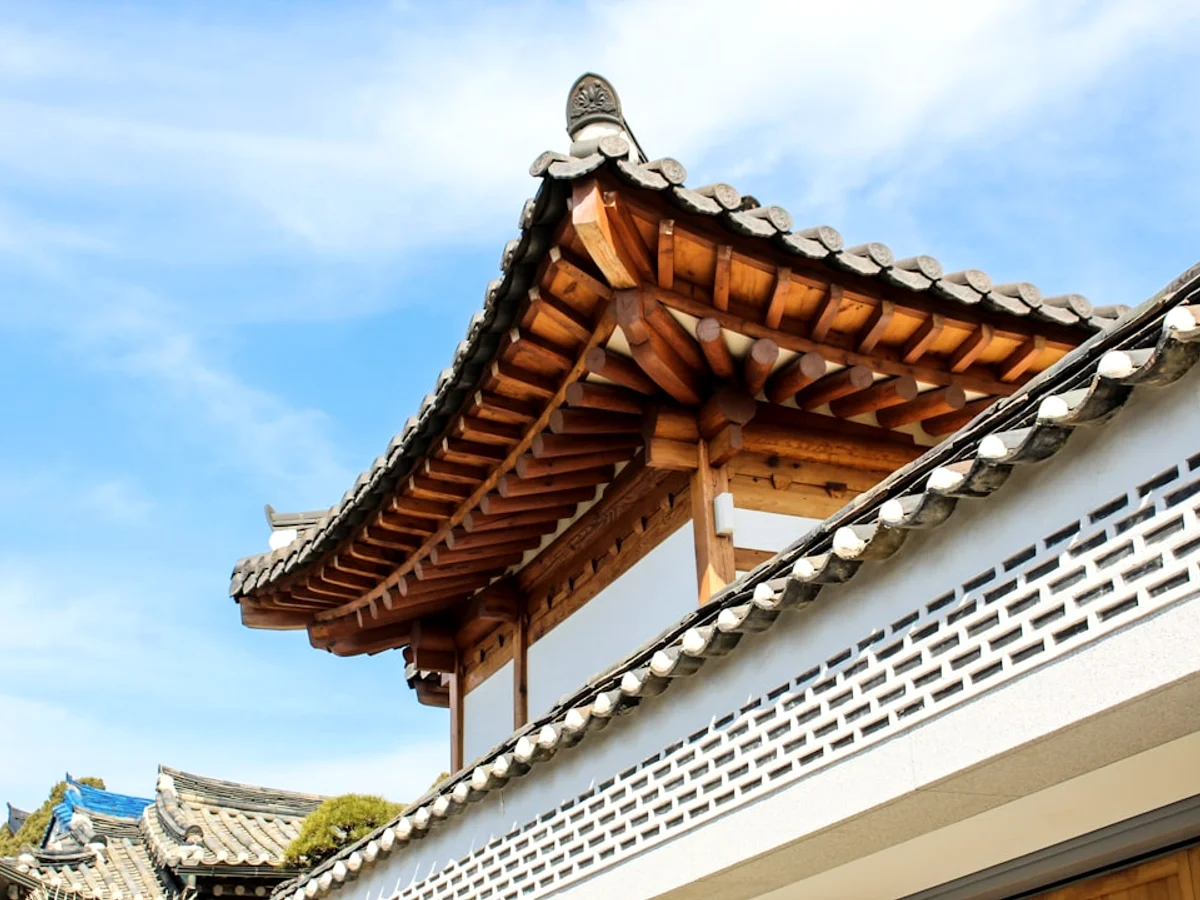
Understanding to Traditional Hanok Stays in Korea
A Hanok stay is much more than just a place to sleep; it’s an immersive Korea’s architectural soul where you sleep on the floor and breathe in the scent of aged pine. These houses are defined by their unique balance of Ondol (underfloor heating) and Daecheong-maru (cool wooden porches), making them a living museum of Korean philosophy.
The Feel of the Wood
When I first stepped into a Hanok in the Bukchon area around 3:00 PM on a Tuesday, the first thing that hit me wasn’t the look, but the smell. It was this deep, earthy aroma of dried grass and old timber that instantly slowed my heart rate down. You see, Hanoks are built without a single nail—it’s all about these intricate interlocking wooden joints. It’s honestly mind-blowing how sturdy they feel despite being made of “natural” materials. Most people expect something flimsy, but these pillars are thick and command respect.
- Baesanimsu philosophy: The house is usually positioned with a mountain behind and a river in front.
- Natural materials: You’re surrounded by wood, rock, soil, and Hanji (traditional paper).
- Spatial flow: The inner courtyard (Madang) isn’t just an empty space; it’s the “lung” of the house.
Why It Matters Today
In a city like Seoul where everything is glass, steel, and screaming neon, the Hanok is a silent protest. I remember sitting on the wooden edge of a porch, watching the rain drip off the curved tiles (Giwa), and thinking about how much we’ve lost in modern apartments. The walls are thin—well, they’re made of paper, literally—so you hear the wind and the neighbors’ muffled whispers. Is it private? Not really. But it’s connected. That’s the point. Most stays will set you back anywhere from 80,000 KRW to 350,000 KRW per night, depending on how “luxury” you want to go.
- High-end Hanoks often feature modernized bathrooms (thankfully!).
- Budget versions might require sharing a bathroom across the courtyard.
- Every Hanok has a name, usually reflecting the owner’s wishes for the guests.
Seasonal considerations for to Traditional Hanok Stays in Korea
Timing is everything because a Hanok is designed to breathe with the seasons, which is great until it’s -10 degrees Celsius outside. From what I observed, while the houses are remarkably adaptable, your experience will change drastically depending on when you decide to book that flight.
The Magic of the Ondol
Winter in a Hanok is a trip. I still remember staying in a small room near Gyeongju during January. Outside, the wind was howling through the bamboo, but the floor—the Ondol—was so hot I could have fried an egg on it. It’s a dry, radiant heat that gets into your bones. It’s a bit of a weird sensation, honestly; your back is toasted while your nose stays slightly chilly. I spent most of the night just rolling around on the floor because it felt so good.
- Winter (Dec-Feb): Best for experiencing the true power of underfloor heating.
- Spring (Mar-May): The Madang gardens come alive with cherry blossoms and plum trees.
- Autumn (Sep-Nov): Perfectly crisp air and the best time for outdoor tea ceremonies.
Summer Humidity and Breezes
Summer is… well, it’s a challenge. Korea gets incredibly humid in July and August, and while the Daecheong-maru (wooden porch) is designed to catch the breeze, it can still feel like a sauna. I once stayed in a Jeonju Hanok where I spent the entire afternoon just lying flat on the wooden floor because it stayed naturally cool. You have to keep the doors open to let the air circulate, but then you’re inviting the local mosquitoes to a buffet. Most modern stays have installed air conditioning now, but using it feels almost like cheating.
- Morning patterns: Wake up early (around 7:00 AM) to catch the coolest air.
- Evening vibes: The courtyard lights up with lanterns as the sun dips.
- Rainy days: This is actually my favorite time; the sound of rain on the clay tiles is incredibly therapeutic.
How to enjoy to Traditional Hanok Stays in Korea
Between us, there’s a specific rhythm to the house that you kind of have to surrender to. You don’t just “stay” in a Hanok; you participate in it. You’ll just end up frustrated by the lack of a high-thread-count mattress.
The Ritual of the Floor
Let’s talk about the Yo. This is the padded mattress you lay on the floor. When I first saw it, I thought, “My back is going to hate me tomorrow.” But there’s something about being low to the ground that changes your perspective. You’re not perched on a bed; you’re grounded. I found that folding the bedding in the morning—a standard practice—makes the room feel massive during the day. It’s a multi-purpose space. One minute it’s a bedroom, the next it’s a dining hall, then it’s a tea room.
- Shoe etiquette: Never, and I mean NEVER, wear shoes inside the room or even on the wooden porch.
- Door handling: The sliding doors (Changhoji) are delicate; use the wooden frame, not the paper.
- Voice levels: Sound travels incredibly fast through paper walls, so keep the late-night chatting low.
Local Customs and Tea
Most hosts will offer a tea ceremony, often around 10:00 AM or 4:00 PM. I initially thought it would be a bit touristy, but the host at my stay in Andong took it seriously. We spent an hour talking about the history of her family’s house while she poured green tea from Boseong. It wasn’t just about the drink; it was about the slow. Everything in Korea is palli-palli (hurry-hurry), but the Hanok demands the opposite. If you’re lucky, they might even let you try on a Hanbok, though I always feel a bit like a giant awkward bird in those silk robes.
- Sit cross-legged on the floor cushions (Bangseok).
- Accept the tea cup with both hands as a sign of respect.
- Don’t be afraid to ask the host about the house’s history—they occasionally love to brag.
Top locations for to Traditional Hanok Stays in Korea
Where you stay matters just as much as the house itself. I noticed that you have the polished, tourist-friendly spots and the “I might actually be lost” locations that offer a much grittier, authentic vibe.
The Big Players: Seoul and Jeonju
Bukchon Hanok Village in Seoul is the obvious choice. It’s gorgeous, but man, is it crowded. You’ll be walking to your room and find fifty tourists taking selfies in front of your door. I prefer the Seochon area near Gyeongbokgung—it’s a bit more “lived-in.” Then there’s Jeonju. The Hanok Village there is massive, with over 800 houses. The food in Jeonju is—oh man—it’s probably the best in the country. I paid about 15,000 KRW for a bibimbap that changed my life.
- Bukchon (Seoul): Best for luxury renovations and proximity to palaces.
- Jeonju: The ultimate “foodie” Hanok destination; very vibrant and busy.
- Gyeongju: Stay here if you want to be surrounded by ancient burial mounds and history.
Off-the-Beaten-Path Gems
If you really want to get away, head to Hahoe Folk Village in Andong. I stayed there three years ago, and it felt like I’d stepped back into the Joseon Dynasty. There are no convenience stores inside the village, and after 6:00 PM, it gets pitch black. You can hear the Nakdong River flowing and nothing else. It’s hauntingly beautiful. Another sleeper hit is Gangneung, where you can find Hanoks right near the ocean. Salt air and old wood? It’s a weird combo but it works.
- Andong Hahoe Village: Authentic, quiet, and slightly inconvenient (in a good way).
- Namsangol Hanok Village: Great for a day trip if you can’t book a stay.
- Jeju Island: They have unique stone-walled Hanoks that look totally different from the mainland ones.
The importance of to Traditional Hanok Stays in Korea
Why bother with a hard floor when there’s a Marriott down the street? Locals mentioned that because the Hanok is the last standing bastion of “Slow Korea.” It’s a cultural anchor in a country that has modernized faster than almost anywhere else on earth.
A Connection to the Ancestors
For Koreans, the Hanok isn’t just “vintage.” It represents a way of living that prioritizes harmony with nature over human convenience. I remember talking to a Moksu (traditional carpenter) who was repairing a roof. He told me that the curve of the roof is meant to mimic the surrounding mountains. That blew my mind. It’s not just a design choice; it’s an apology for taking up space. When you stay in one, you’re supporting the craftsmen who keep these ancient skills alive.
- Cultural preservation: Staying in a Hanok provides the funds needed for expensive upkeep.
- Spiritual reset: The lack of “noise” (visual and literal) acts as a mental detox.
- Social status: Historically, the size and style of your Hanok showed your rank in society.
Modern Relevance
You’d think young Koreans would hate these old houses, but they’re actually becoming super trendy again. They call it “Newtro” (New + Retro). I see kids in their early 20s booking Hanoks for weekend getaways just to take “aesthetic” photos for Instagram. But hey, if it keeps the houses from being torn down for more apartments, I’m all for it. It’s a weird bridge between the generation that had to live in them out of necessity and the generation that chooses them for the “vibe.”
- Hanok cafes are exploding in popularity in areas like Ikseon-dong.
- Many Hanoks are being converted into galleries and craft workshops.
- It’s a point of national pride that distinguishes Korea from its neighbors.
Common mistakes with to Traditional Hanok Stays in Korea
I’ve seen people ruin their own experience because they expected a 5-star hotel experience in a building that was designed 200 years ago. You have to adjust your expectations, or you’ll just end up grumpy. There’s this unique vibe you can’t describe.
The Noise and Privacy Issue
The biggest shock for most people is the sound. I stayed in a place once where I could hear the guy in the next room snoring like a freight train. The walls are thin, okay? It’s part of the deal. If you’re a light sleeper, bring earplugs. Also, don’t expect a giant suitcase to fit comfortably in your room. These rooms were designed for people who owned a chest of drawers and two outfits.
- Overpacking: Don’t bring your massive 30kg suitcase; it’ll scuff the wooden floors and won’t fit anyway.
- Late arrivals: Most hosts are older and go to bed early; try to check in before 7:00 PM.
- The “Paper” mistake: I saw a kid accidentally poke a finger through a Hanji door. The look on the owner’s face? Pure heartbreak.
Expectations vs. Reality
Another thing is the bathroom situation. Some “authentic” stays still have the bathroom located outside the main room, across the courtyard. Walking across a freezing yard at 3:00 AM to pee is… character building. Make sure you read the booking description carefully. If it says “traditional bathroom,” it might mean “bring your slippers and a coat.”
- Check if your room has an en-suite or shared bath.
- Don’t expect a TV or high-speed Wi-Fi in the really traditional spots.
- Remember that you are a guest in someone’s history, not just a customer.
Practical advice for to Traditional Hanok Stays in Korea
Booking these places can be a bit of a headache if you don’t know where to look. While the big sites have listings, the best ones are occasionally tucked away on Korean-language blogs or local booking platforms. It’s free to enter.
Booking and Prices
Honestly, I’d avoid the super-cheap ones under 50,000 KRW. They here lack insulation and the “hospitality” can be a bit cold. Aim for the 120,000 - 180,000 KRW range for a solid mix of comfort and tradition. I use “Stayfolio” or even Airbnb, but I always cross-check with Naver Maps to see what the locals are saying. If the reviews are all in Korean, that’s a good sign of authenticity.
- Check-in/out: 3:00 PM and 10:00 AM.
- Payment: Many smaller places prefer cash or bank transfers, though credit cards are becoming common.
- Location: Use the KakaoMap app; Google Maps is pretty useless for finding the tiny alleys where Hanoks hide.
What to Bring
You don’t need much, but a few things make life easier. Thick socks are a must. Even with the Ondol, the wooden parts of the floor can feel a bit chilly in the morning. I also suggest bringing your own toiletries; many Hanoks provide “communal” soap which… well, I’m not a fan. And remember, the floor is your furniture. If you have bad knees, maybe look for a Hanok that offers a low bed frame instead of just a mattress on the floor.
- Portable charger: Outlets are in weird places in old houses.
- Easy-on shoes: You’ll be taking your shoes on and off constantly.
- Small towel: Traditional Korean towels are much smaller than Western bath towels—think the size of a hand towel.