What is A Traveler’s Guide to Korean Noodle Dishes: Ramyeon, Naengmyeon, and Jajangmyeon?
Whether it’s the icy, chewy snap of buckwheat noodles or the thick, earthy sludge of black bean sauce, these dishes define the daily rhythm of Korean life. It’s the kind of food that bridges the gap between a busy salaryman’s lunch and a nostalgic family gathering. Noodle dishes in Korea are way more than just a quick meal; they’re a historical record of the country’s transformation from post-war scarcity to a modern culinary powerhouse.
The Soul of the Slurp
When I first visited a tiny shop in Insa-dong around 2 PM, I was baffled by the sheer variety. You have Naengmyeon, which is this incredibly refreshing cold noodle dish usually made from buckwheat. Then there’s Jajangmyeon, the ultimate comfort food—thick wheat noodles smothered in a fermented black bean sauce that looks like ink but tastes like heaven. And of course, Ramyeon, the spicy, instant staple that has basically become Korea’s unofficial national dish. Each one has a “why” behind it, rooted in North Korean migration or Chinese-Korean fusion.
- Naengmyeon: Cold buckwheat noodles, originally a winter delicacy from the North (Pyeongyang and Hamhung).
- Jajangmyeon: A Korean-style Chinese dish with a salty-sweet black bean paste (chunjang), diced pork, and onions.
- Ramyeon: Spicy instant noodles often customized with eggs, cheese, or seafood, popularized in the 1960s to combat food shortages.
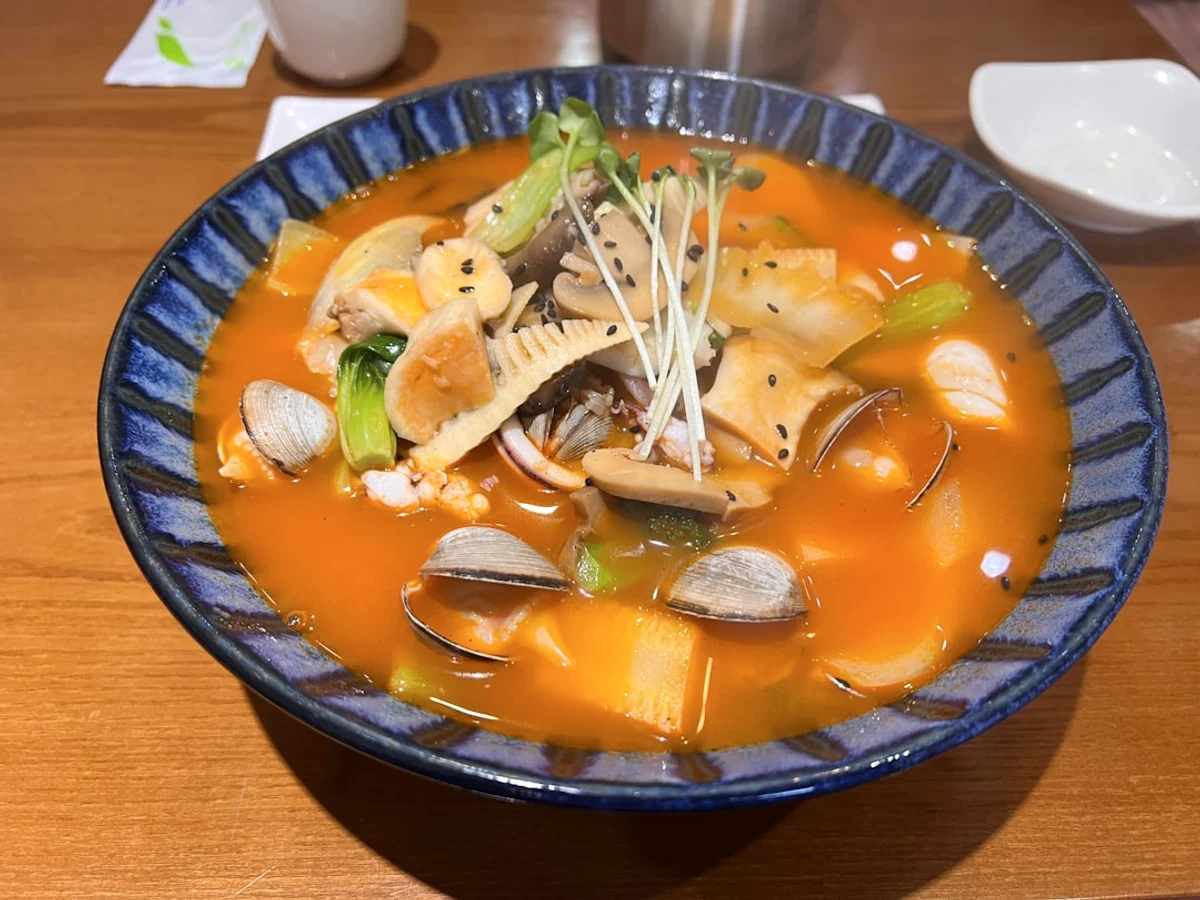
- Jjamppong: The fiery, seafood-heavy cousin of Jajangmyeon that will make your nose run in the best way possible.
History and Heart
Honestly, I was surprised to learn that Jajangmyeon isn’t actually “Chinese” in the way people in Beijing would recognize it. It was adapted by Chinese immigrants in Incheon back in the early 1900s to suit Korean palates. It’s fascinating how a dish can travel and change so much. The ingredients are simple—flour, water, beans, vegetables—but the preparation is an art. I still remember watching a chef hand-pull noodles in a basement kitchen; the sound of the dough hitting the table was like a drumbeat. It makes you realize that even “cheap” food has a massive amount of labor behind it.
- Pyeongyang Naengmyeon: Known for its subtle, almost bland beef broth that purists obsess over.
- Hamhung Naengmyeon: Uses potato or sweet potato starch for a much chewier texture, usually served with a spicy red pepper dressing.
- Kalguksu: “Knife-cut” noodles served in a warm, comforting broth, often found in traditional markets.
Top locations for A Traveler’s Guide to Korean Noodle Dishes: Ramyeon, Naengmyeon, and Jajangmyeon
For Jajangmyeon, that means heading to Incheon’s Chinatown, right outside Incheon Station. For Naengmyeon, the old-school spots in Euljiro or Jongno are where the elders go, and they know what’s up. If you want the absolute best, you have to go where the history is. Fun fact: you can find Ramyeon literally anywhere, but the “Ramyeon Libraries” or specialized convenience stores near the Han River offer the most “Seoul” experience you can get.
The Legends of Euljiro and Incheon
I still remember the first time I walked into Gonghwachun in Incheon. It’s legendary. The building itself feels like a museum, and the Jajangmyeon there is rich, oily, and perfectly balanced. If you’re looking for Naengmyeon, Woo Lae Oak near Euljiro 4-ga Station is a must-visit. The vibe is very “retro-grandeur,” and the line starts forming well before opening time at 11:30 AM. I waited for about 40 minutes, and though the price was around 16,000 won, every sip of that beefy broth was worth it.
- Gonghwachun (Incheon): The purported birthplace of modern Jajangmyeon.
- Woo Lae Oak (Seoul): One of the oldest and most respected Pyeongyang Naengmyeon houses.
- Gwangjang Market: Go here for Kalguksu (knife-cut noodles); look for the stalls with the steaming vats and heaps of fresh dough.
- Myeongdong Kyoja: Famous for their garlic-heavy Kimchi and silky smooth Kalguksu—it’s a Michelin Bib Gourmand spot for a reason.
Hidden Gems and Market Stalls
Sometimes the flashy places are overrated, you know? The most soul-satisfying Ramyeon I ever had was at a “Gimbap Cheonguk” (Gimbap Heaven) near Sinchon Station at 3 AM. It cost maybe 4,500 won, and the lady behind the counter threw in a handful of bean sprouts that made the broth incredibly crisp. Also, don’t sleep on the “Noodle Alleys” in traditional markets like Namdaemun. The floors might be a bit slippery and the seating is just a plastic stool, but the warmth of the steam hitting your face on a cold day is unmatched.
- Namdaemun Market Kalguksu Alley: You get a free side of cold spicy noodles when you order the warm soup.
- Convenience Store Ramyeon: Specifically the ones at Yeouido Hangang Park where you use the induction machines.
- Local “Chinese” delivery: If you’re staying in an Airbnb, ordering Jajangmyeon to your door is a quintessential Korean experience.
Best time for A Traveler’s Guide to Korean Noodle Dishes: Ramyeon, Naengmyeon, and Jajangmyeon
There is a very specific rhythm to when Koreans eat certain noodles. Naengmyeon is the undisputed king of summer, especially during the “Sambok” days (the three hottest days of the year). During my visit, jajangmyeon is the go-to for graduation days or moving into a new house. For Ramyeon? Well, that’s a 24/7 affair, though it definitely tastes better when it’s raining outside or after a long night of karaoke.
Seasonal Sensations
처음 갔을 때, I didn’t realize that people actually queue in the sweltering heat for cold soup. It seemed counterintuitive until I tried it. The icy broth of Mul-Naengmyeon literally lowers your core temperature. On the flip side, during the winter months, nothing beats a bowl of spicy Jjamppong. The steam fogs up your glasses, and the spicy seafood broth warms you from the inside out. I aim to eat these between 2 PM and 4 PM to avoid the frantic office worker lunch rush.
- Summer (June-August): Peak Naengmyeon season. Try Kong-guksu (noodles in cold soy milk broth) too!
- Winter (December-February): Best for Kalguksu and spicy Jjamppong.
- Rainy Days: Koreans have a thing for flour-based foods (noodles and pancakes) when it rains. It’s a vibe.
- Late Night: Post-10 PM is the golden hour for convenience store Ramyeon.
The Daily Rhythm
You know, the thing is, noodle shops sometimes have weirdly specific peak times. Jajangmyeon is a classic Sunday family lunch. I remember walking past a neighborhood joint on a Sunday around 1 PM, and it was packed with kids with black sauce all over their faces. If you’re a tourist, try to hit the famous spots at 11 AM sharp or late afternoon like 3:30 PM. Most of the old-school places don’t really do “break times,” but they do run out of certain ingredients if you go too late in the evening.
- Breakfast: Surprisingly, a light Ramyeon or Kalguksu is a common hangover cure.
- Lunch: The “fast food” of Korea; most noodle dishes are served within 5-10 minutes.
- Dinner: here paired with Tangsuyuk (sweet and sour pork) if you’re doing the Jajangmyeon route.
How to enjoy A Traveler’s Guide to Korean Noodle Dishes: Ramyeon, Naengmyeon, and Jajangmyeon
It’s loud, it’s messy, and if you’re doing it right, you’ll probably need a bib. Not gonna lie, there’s a specific etiquette to it—like not being afraid to slurp—and some “pro moves” involving vinegar and mustard that will completely change your experience. Eating noodles in Korea is a full-contact sport. Honestly, the first time I saw someone dumping a huge glob of mustard into their cold noodles, I was skeptical, but now I can’t eat it any other way. I’d pick this over other options any day. The warm atmosphere made it cozy.
The Art of the Slurp and Clip
When the server brings your Naengmyeon, they will here ask if you want it cut. Say yes. These noodles are incredibly long and chewy; if you don’t cut them with the giant scissors provided, you might actually choke. I learned that the hard way. Also, the broth in Naengmyeon is served quite plain. You’re expected to add vinegar and hot mustard (gyeonja) to your liking. Start small, taste, and add more. It’s all about the balance of sour, spicy, and savory.
- Use the scissors: For Naengmyeon and sometimes Kalguksu, the scissors are your best friend.
- Yellow Radish (Danmuji): This is the mandatory side dish for Jajangmyeon. The crunch cuts through the oily sauce perfectly.
- Vinegar and Mustard: Essential table condiments for cold noodles.
- Don’t wear white: If you’re eating Jajangmyeon or Jjamppong, ask for an “apron” (ap-chi-ma). Most places have them hanging on the wall.
Ordering and Pairing
뭐랄까, there’s a certain way to order that makes you look like a local. If you’re at a Chinese-Korean restaurant, you don’t just order Jajangmyeon. You order the “set menu” that includes Tangsuyuk (sweet and sour pork). The combination of the hot, crispy pork and the saucy noodles is the gold standard. For Ramyeon, pairing it with a triangle gimbap from the convenience store is the ultimate budget hack. You eat the noodles first, then dump the rice from the gimbap into the leftover spicy broth. It’s a game changer.
- Mix thoroughly: Jajangmyeon needs a good minute of vigorous mixing with your chopsticks to coat every strand.
- The “Half-and-Half” bowl: Can’t decide between Jajangmyeon and Jjamppong? Order a Jjam-jja-myeon—a bowl split down the middle.
- Ask for “Yuksu”: In Naengmyeon places, they sometimes give you a kettle of hot beef broth. Drink it while you wait; it’s like a savory tea.
Why do Koreans love A Traveler’s Guide to Korean Noodle Dishes: Ramyeon, Naengmyeon, and Jajangmyeon?
They are the ultimate “people’s food”—affordable, filling, and deeply nostalgic. Koreans love noodles because they represent resilience and the “Pali-pali” (hurry-hurry) culture perfectly. Whether it’s the post-war adaptation of wheat or the modern obsession with spicy Ramyeon challenges, noodles are a reflection of the Korean spirit. Plus, let’s be real, they’re just incredibly addictive.
Social Fabric and Nostalgia
아직도 기억나는 게, my Korean friend told me that Jajangmyeon tastes like “moving day.” In Korea, it’s a tradition to order black bean noodles when you move house because you don’t have your kitchen set up yet. That smell of fried bean paste is linked to new beginnings. Then you have Ramyeon, which is the ultimate social equalizer. Rich or poor, everyone eats it. It’s the food of students pulling all-nighters and hikers reaching the mountain peak. It’s about shared experiences.
- Fast Pace: Most noodle dishes can be eaten in under 15 minutes, fitting the busy Korean lifestyle.
- Affordability: You can still get a massive bowl of noodles for under 8,000 won in many places.
- Customization: From adding a slice of American cheese to Ramyeon to choosing between spicy or mild Naengmyeon, there’s an option for everyone.
- Cultural Identity: These dishes have appeared in countless K-dramas and movies (like the “Chapaguri” in Parasite), making them a point of national pride.
Modern Popularity and Global Reach
You know what’s crazy? The global “Fire Noodle Challenge” started right here in Seoul. Koreans have this weird love-affair with spicy food that borders on masochism. But it’s not just about the heat; it’s about the “stress release.” I’ve seen office workers sweating over a bowl of fiery Jjamppong, claiming it’s the only way they can deal with their boss. The modern noodle scene is constantly evolving, with “fusion” spots popping up in Gangnam and Hongdae that mix traditional recipes with things like truffle oil or cream sauce.
- Stress Relief: Spicy noodles are believed to help release endorphins.
- Media Influence: K-Pop stars eating ramyeon on livestreams creates instant trends.
- Variety: There are hundreds of types of instant ramyeon alone in a typical supermarket.
Pitfalls to avoid
For instance, don’t be that person who leaves their chopsticks sticking straight up in the bowl—it’s a major faux pas related to funeral rites. One local explained that and seriously, watch out for the red splashes; they’re permanent. The biggest mistake people make is underestimating the spice or the “chew factor.” Also, there are some social nuances that can make your meal a bit awkward if you don’t know them.
Common Tourist Blunders
솔직히 말하면, the first time I tried Pyeongyang Naengmyeon, I thought it was tasteless. I almost asked for salt. Don’t do that. It’s supposed to be subtle. The more you eat it, the more you appreciate the clean, elegant flavor of the beef and buckwheat. Another pitfall is the spice level. If a menu says “mildly spicy” (yak-gan-mae-un-mat), it might still blow your head off if you aren’t used to it. Always have a carton of milk or a sugary drink nearby if you’re trying a new spicy Ramyeon.
- Sticking chopsticks in rice/noodles: Never leave them upright; lay them across the bowl or on the rest.
- Wasting the broth: In many places, leaving the broth is like saying you didn’t like the meal. Try to drink a good portion of it.
- Over-cutting: Don’t turn your noodles into confetti. One or two snips with the scissors is enough.
- Ignoring the apron: If you see a pile of red or black aprons, take one. Your laundry bill will thank you.
Ordering and Payment Errors
Sometimes people get confused by the self-service kiosks that are now everywhere in Seoul. Most have an English button, but if they don’t, look for the pictures! Also, in many traditional noodle shops, you pay at the counter on your way out, not at the table. I once sat at a table for 15 minutes waiting for the bill before I realized everyone else was just walking to the door to pay. It was a bit embarrassing, but the “ajumma” (older lady) just laughed at me.
- Self-service water: , you have to get your own water from a dispenser. Look for a sign that says “물은 셀프” (Water is self-service).
- Side dish refills: In most noodle joints, you can refill your yellow radish or kimchi yourself at a “self-bar.”
- Cash in markets: While most places take cards, some tiny market stalls still prefer cash, especially for meals under 6,000 won.
Expert tips for A Traveler’s Guide to Korean Noodle Dishes: Ramyeon, Naengmyeon, and Jajangmyeon
If you’re really hungry, look for the word “Gopbaegi” (곱빼기) on the menu. This means “double portion.” It only costs an extra 1,000 to 2,000 won, and the bowl you get is massive. Also, if you’re vegetarian, you need to be careful. Even if a dish looks like it’s just vegetables, the base broth is almost always beef, dried anchovy, or pork. Always ask “Gogi eopsi?” (Without meat?) though it can be a challenge in traditional spots. The sound of traditional music drifted through the air.
Managing the Heat and the Price
The price range for noodles is pretty broad. A standard bowl of Jajangmyeon should be around 6,000 to 8,000 won. If you’re paying 15,000 won, you’re either in a very fancy place or a tourist trap—unless it’s a high-end Naengmyeon spot, where those prices are normal because of the beef quality. To manage spice, I always order a side of Mandu (dumplings). The dough and meat filling act like a buffer for the chili oil.
- Gopbaegi: Double the noodles for a tiny extra fee.
- Vegetarian Tip: Look for Bibim-guksu (spicy cold noodles) and ask if the sauce is fruit-based, though anchovy is common.
- Price Expectation: 5,000 - 15,000 won per bowl depending on the location and dish.
- Spice Control: Ask for the sauce on the side (yang-nyeom-ttaro) for cold noodles so you can control the heat.
The Convenience Store Hack
Honestly, some of the best noodle experiences happen at GS25 or CU. You can buy a cup of Ramyeon, a soft-boiled egg, and a string cheese. Microwave them together for 30 seconds, and you have a gourmet-ish meal for under 5,000 won. I used to do this at the Han River around 11 PM after a long day of exploring. It’s a very local, very “Seoul” way to end the night. The sound of the river, the bright lights of the convenience store, and the steam from the noodles… it’s perfect.
- Pick the right Ramyeon: “Shin Ramyun” is the classic, but “Jin Ramen” (Blue label) is great if you want less spice.
- Add toppings: Most convenience stores sell individual portions of green onions, eggs, and even sliced brisket.
- The Rice Finish: If you have leftover sauce or broth, buy a small bowl of instant rice (Haetban), heat it up, and mix it in. No waste!